59 artistic positions

Artists

Judith enters careers at different scales: a repeated workshop type, a civic monument, a private wall painting, an engraved translation, or a subject revised over decades.

active c. 1230–1240 · Paris

Leber Group workshop

Leber Group workshop enters this exhibition through a work that locates Judith within gothic manuscript illumination. The object record distinguishes established catalog data from the curatorial connections drawn here.
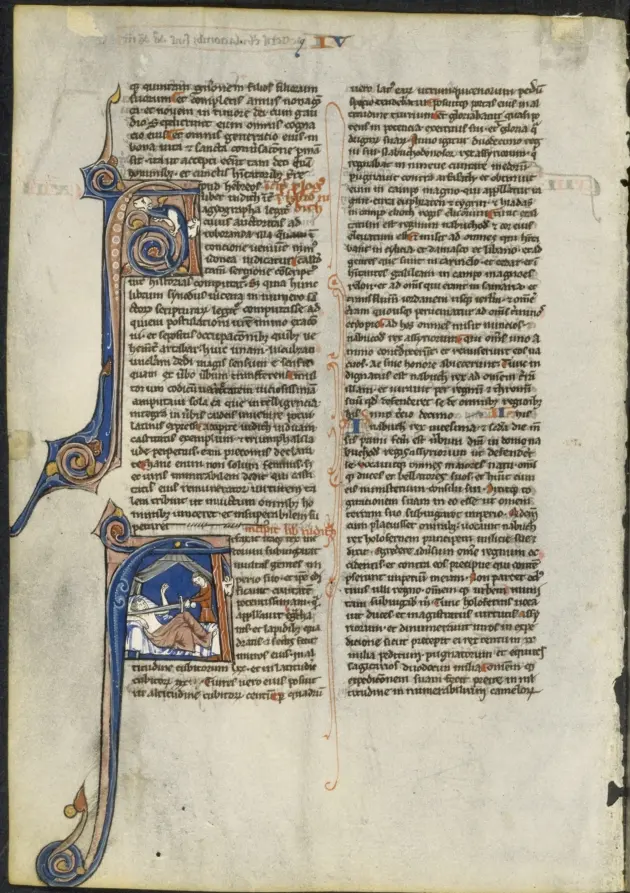
Judith in the career

Here Judith concentrates concerns already active in the artist's practice: biblical heroine, the act, manuscript illumination.

active c. 1275–1300 · Southern France, possibly Toulouse

Unknown illuminator, southern France

Unknown illuminator, southern France enters this exhibition through a work that locates Judith within gothic manuscript illumination. The object record distinguishes established catalog data from the curatorial connections drawn here.

Judith in the career

Here Judith concentrates concerns already active in the artist's practice: biblical heroine, the sword raised, the act.

active c. 1370–1390 · Italy, workshop unverified

Unknown Italian illuminator

Unknown Italian illuminator enters this exhibition through a work that locates Judith within medieval typological manuscript. The object record distinguishes established catalog data from the curatorial connections drawn here.

Judith in the career

Here Judith concentrates concerns already active in the artist's practice: marian typology, manuscript illumination, the act.

c. 1386–1466 · Florence

Donatello

The leading sculptor of early Renaissance Florence made the bronze group late in his career. It was recorded in the Medici garden by 1464, although its original patron and destination remain debated. Confiscated after Piero di Lorenzo de’ Medici’s expulsion, it entered Piazza della Signoria in 1495, moved to the Loggia dei Lanzi in 1506 and the Palazzo Vecchio platform in 1919, and has been conserved in the Sala dei Gigli since 1988. Each move changed who could claim its warning against tyranny and pride.

Judith in the career

Here Judith concentrates concerns already active in the artist's practice: civic virtue, tyrannicide, the sword raised.

1445–1510 · Florence

Sandro Botticelli

Botticelli's early pair of small Judith panels joins lyrical line to Florentine interest in the heroine as civic virtue. Choosing the return and the discovery lets the paintings divide triumph from horror while keeping them materially paired.

Judith in the career

These works make change visible across versions: pose, helper, light, force, and the selected narrative instant become evidence of continued artistic thought rather than mere duplication.

attribution under study · Mantua / northern Italy

Andrea Mantegna or follower (possibly Giulio Campagnola)

Andrea Mantegna or follower (possibly Giulio Campagnola) enters this exhibition through a work that locates Judith within renaissance. The object record distinguishes established catalog data from the curatorial connections drawn here.

Judith in the career

Here Judith concentrates concerns already active in the artist's practice: judith and her maid, aftermath, attribution.

active c. 1458–1531 · Venice

Girolamo Mocetto, after Andrea Mantegna

Girolamo Mocetto, after Andrea Mantegna enters this exhibition through a work that locates Judith within renaissance printmaking. The object record distinguishes established catalog data from the curatorial connections drawn here.

Judith in the career

Here Judith concentrates concerns already active in the artist's practice: print culture, judith and her maid, transmission.

1502–1540 · Nuremberg

Barthel Beham

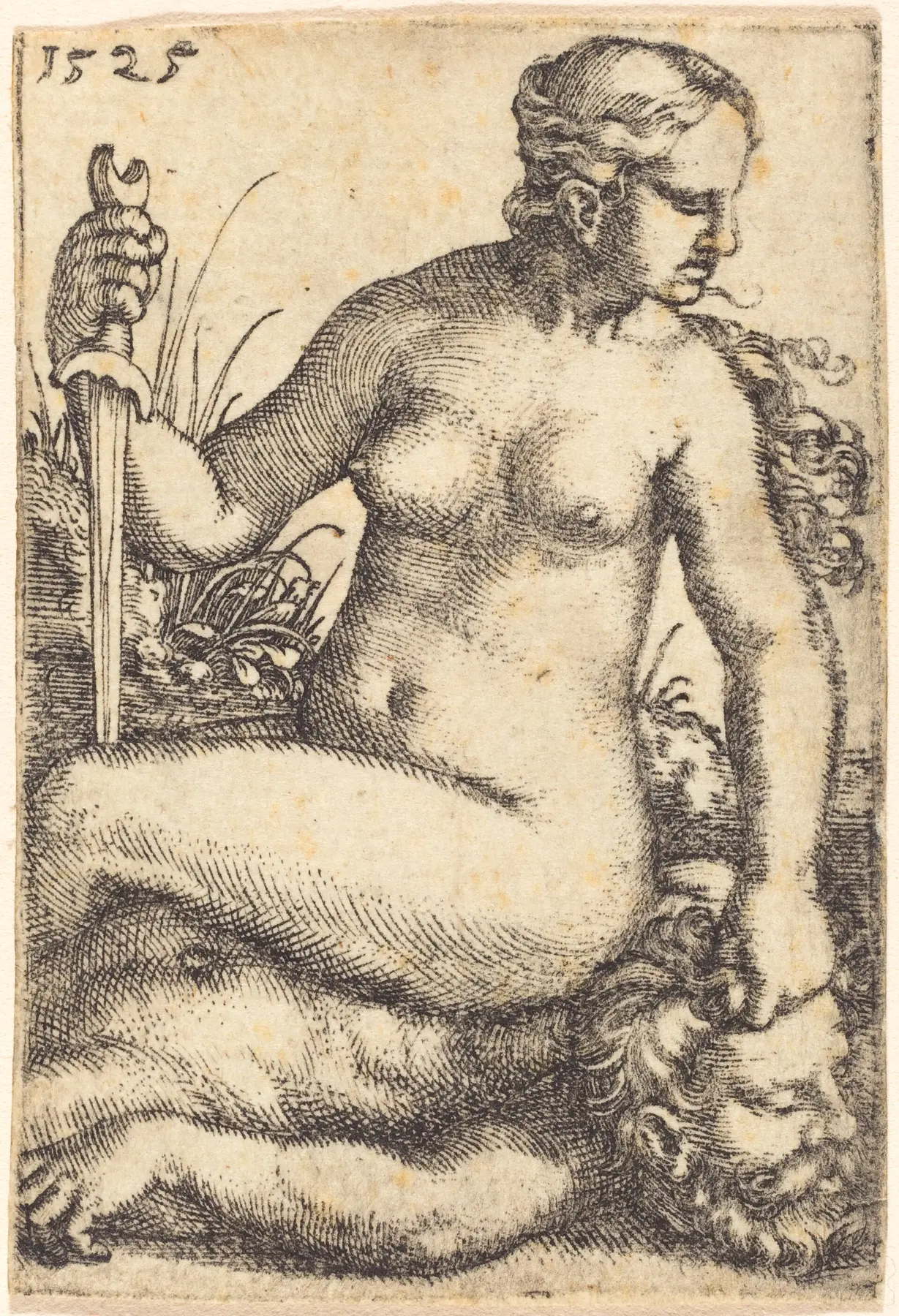
Barthel Beham enters this exhibition through a work that locates Judith within german renaissance printmaking. The object record distinguishes established catalog data from the curatorial connections drawn here.

Judith in the career

Here Judith concentrates concerns already active in the artist's practice: print culture, power of women, eroticism.

1472–1553 · Wittenberg

Lucas Cranach the Elder

Court painter to the electors of Saxony, Cranach led a highly productive workshop. His several Judiths combine fashionable dress, polished portrait convention, and a gruesome attribute in a formula whose repeatability was part of its courtly success.

Judith in the career

Here Judith concentrates concerns already active in the artist's practice: renaissance beauty, power of women, the head.

1522–1590; after 1498–1574 · Haarlem

Dirck Volckertsz Coornhert, after Maarten van Heemskerck

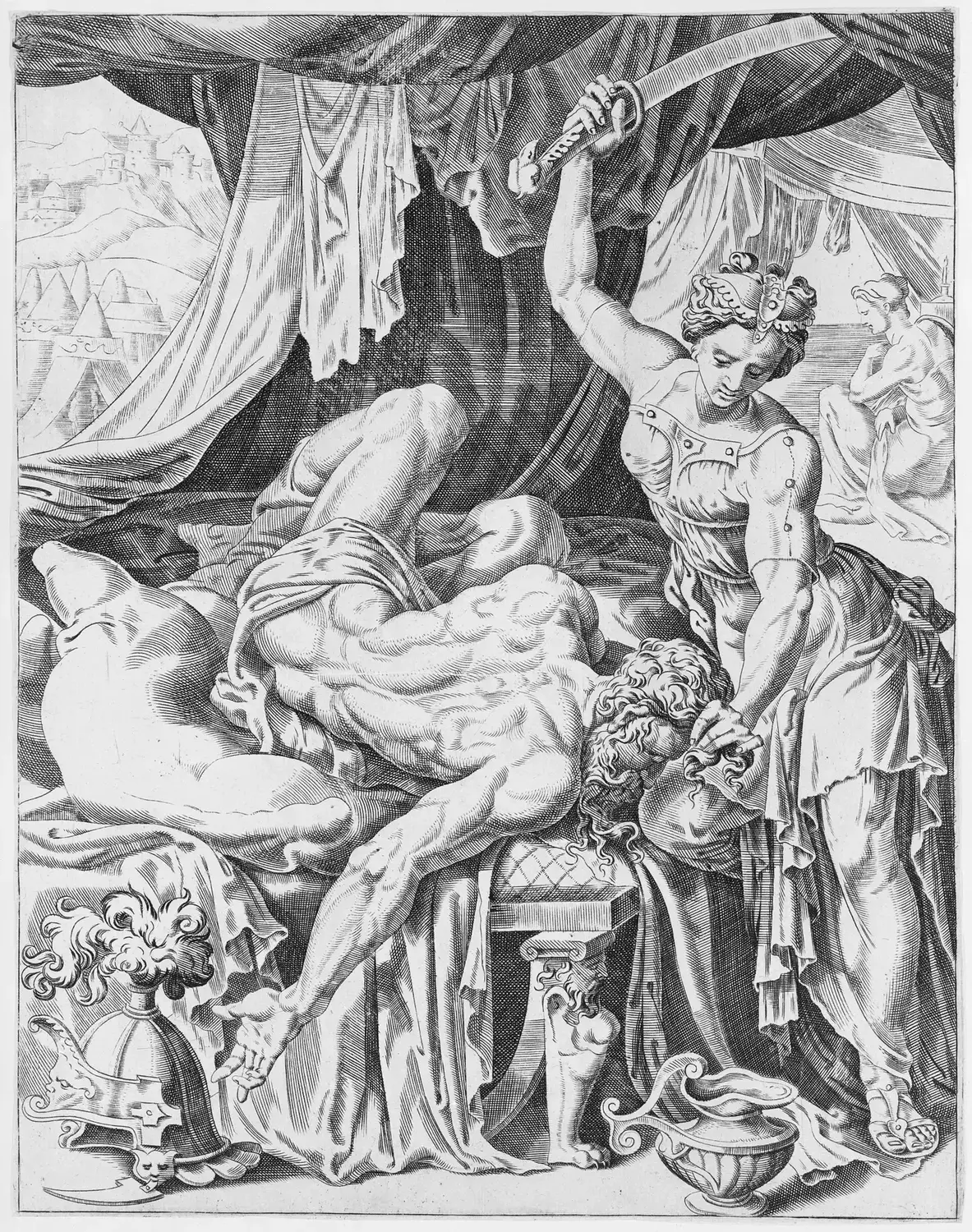
Dirck Volckertsz Coornhert, after Maarten van Heemskerck enters this exhibition through a work that locates Judith within northern renaissance printmaking. The object record distinguishes established catalog data from the curatorial connections drawn here.

Judith in the career

Here Judith concentrates concerns already active in the artist's practice: print culture, power of women, serial image.

1528–1588 · Venice

Paolo Veronese

Paolo Veronese enters this exhibition through a work that locates Judith within late renaissance. The object record distinguishes established catalog data from the curatorial connections drawn here.

Judith in the career

Here Judith concentrates concerns already active in the artist's practice: renaissance beauty, dress, the head.

1558–1617; after 1546–1611 · Haarlem / Prague

Hendrik Goltzius, after Bartholomaeus Spranger

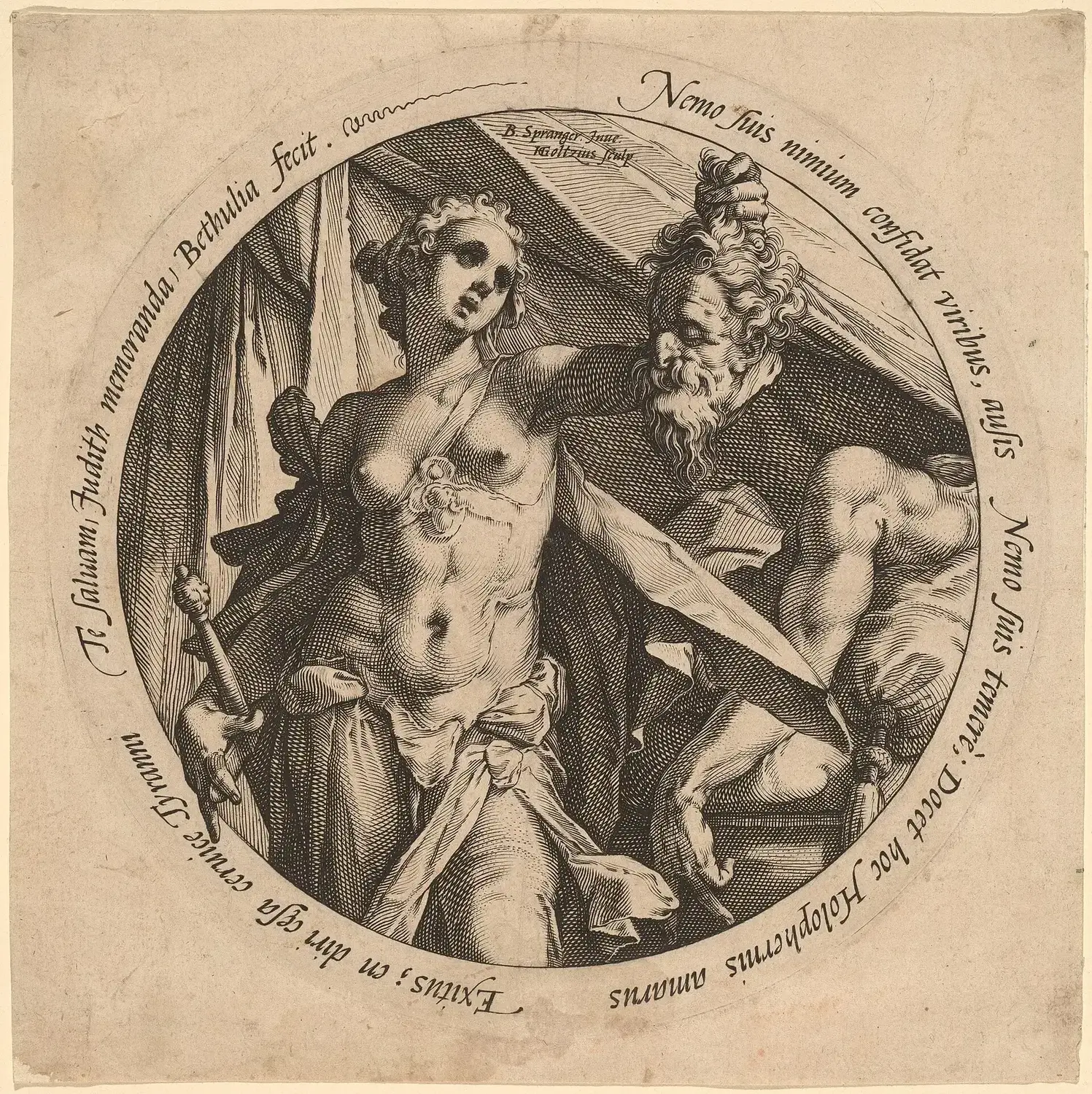
Hendrik Goltzius, after Bartholomaeus Spranger enters this exhibition through a work that locates Judith within northern mannerist printmaking. The object record distinguishes established catalog data from the curatorial connections drawn here.

Judith in the career

Here Judith concentrates concerns already active in the artist's practice: print culture, transmission, the head.

1571–1610 · Rome

Caravaggio

Caravaggio reorganized history painting around ordinary bodies under coercive light. His Judith belongs to a Roman period of closely staged sacred violence; it converts a familiar aftermath subject into the unstable present tense of a blade meeting flesh.

Judith in the career

Here Judith concentrates concerns already active in the artist's practice: the act, tenebrism, violence and restraint.

1576–1650; after 1577–1640 · Antwerp

Cornelis Galle I, after Peter Paul Rubens

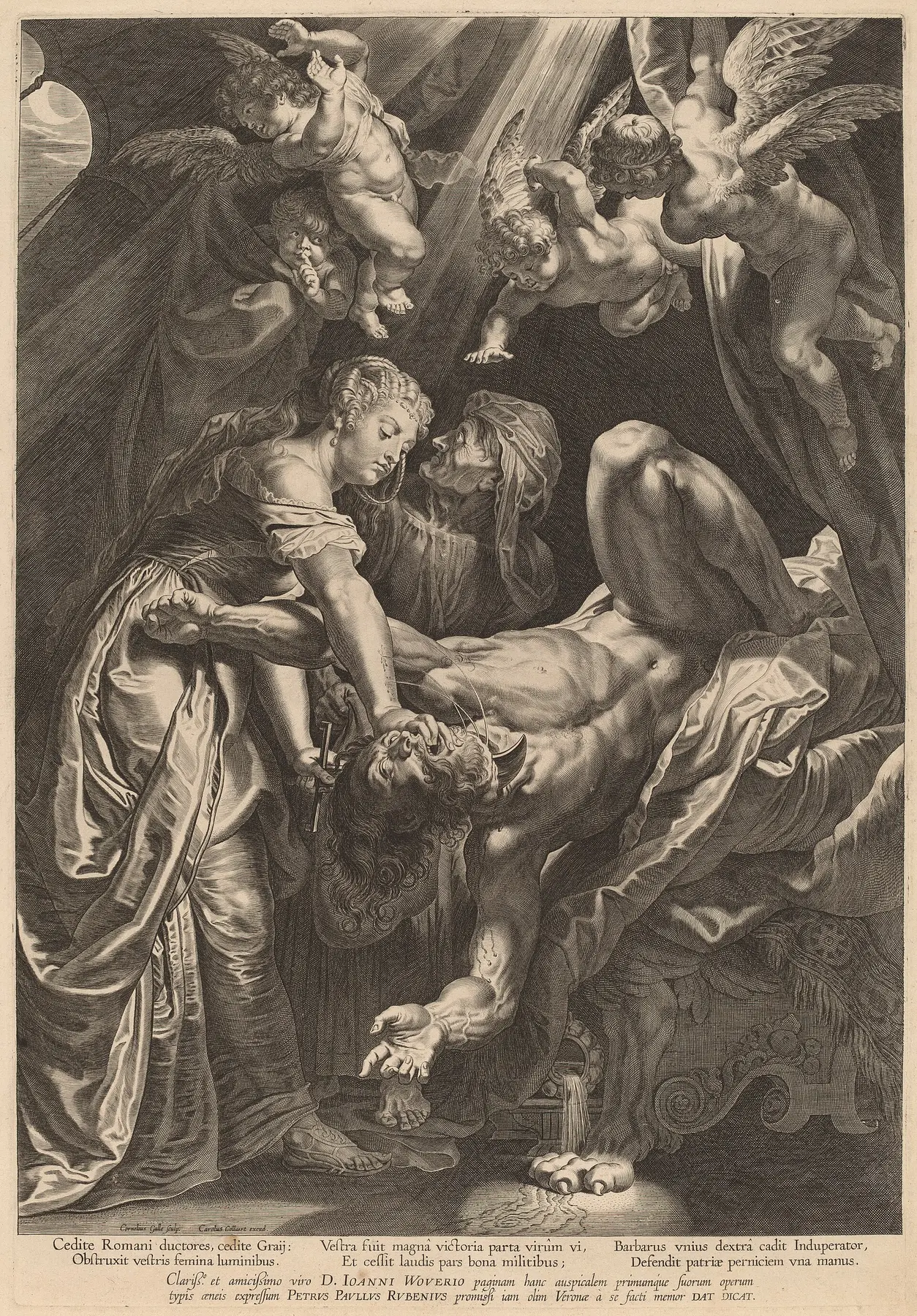
Cornelis Galle I, after Peter Paul Rubens enters this exhibition through a work that locates Judith within baroque reproductive printmaking. The object record distinguishes established catalog data from the curatorial connections drawn here.

Judith in the career

Here Judith concentrates concerns already active in the artist's practice: print culture, after rubens, the act.

1577–1621 · Florence

Cristofano Allori

Cristofano Allori enters this exhibition through a work that locates Judith within baroque. The object record distinguishes established catalog data from the curatorial connections drawn here.

Judith in the career

Here Judith concentrates concerns already active in the artist's practice: renaissance beauty, the head, portraiture.

1593–after 1654 · Rome / Naples

Artemisia Gentileschi

A Roman-born painter who worked in Florence, Rome, Venice, Naples, and London, Gentileschi combined Caravaggesque light with formidable narrative construction. In Florence she worked within the Medici court’s orbit and in 1616 became the first woman admitted to the Accademia del Disegno. The Uffizi connects its large Judith to Grand Duke Cosimo II de’ Medici and records both resistance to displaying it and delayed payment secured with Galileo Galilei’s help—evidence that patronage, reputation, money, and access belong beside form and biography. Judith recurs across Gentileschi’s career in the killing, escape, and aftermath; no single event or interpretive key explains that sustained work.

Judith in the career

These works make change visible across versions: pose, helper, light, force, and the selected narrative instant become evidence of continued artistic thought rather than mere duplication.

1571–1626 · Rome

Antiveduto Gramatica

Antiveduto Gramatica enters this exhibition through a work that locates Judith within baroque / caravaggism. The object record distinguishes established catalog data from the curatorial connections drawn here.

Judith in the career

Here Judith concentrates concerns already active in the artist's practice: judith and her maid, aftermath, tenebrism.

1606–1669 · Amsterdam

Rembrandt van Rijn

Rembrandt's 1634 painting demonstrates the instability of subject identification. Once called Artemisia or Sophonisba, it is now read by the Prado as Judith at Holofernes's banquet—a title that makes suspended luxury part of the plot.

Judith in the career

Here Judith concentrates concerns already active in the artist's practice: before the blow, banquet, attribution history.

c. 1604–1676 · Paris

Abraham Bosse

Abraham Bosse enters this exhibition through a work that locates Judith within french baroque printmaking. The object record distinguishes established catalog data from the curatorial connections drawn here.

Judith in the career

Here Judith concentrates concerns already active in the artist's practice: print culture, the act, domestic interior.

active early 19th century · Poland

Unknown Polish maker

Unknown Polish maker enters this exhibition through a work that locates Judith within jewish ceremonial art. The object record distinguishes established catalog data from the curatorial connections drawn here.

Judith in the career

Here Judith concentrates concerns already active in the artist's practice: jewish reception, hanukkah, ceremonial art.

1746–1828 · Madrid

Francisco de Goya

Goya's long career moved through tapestry designs, court portraiture, war, printmaking, and private experiment. His Judith was painted on the wall of the Quinta del Sordo among the works later called the Black Paintings, never intended as a public cycle.

Judith in the career

Here Judith concentrates concerns already active in the artist's practice: the sword raised, psychological, black paintings.

1810–1890 · Britain

John Rogers Herbert

John Rogers Herbert enters this exhibition through a work that locates Judith within victorian history painting. The object record distinguishes established catalog data from the curatorial connections drawn here.

Judith in the career

Here Judith concentrates concerns already active in the artist's practice: before the blow, prayer, victorian.

1862–1918 · Vienna

Gustav Klimt

A founder of the Vienna Secession, Klimt used ornament, gold, shallow space, and the female figure to unsettle distinctions between portrait, allegory, and erotic image. Judith I stands at the threshold of his celebrated Golden Period.

Judith in the career

These works make change visible across versions: pose, helper, light, force, and the selected narrative instant become evidence of continued artistic thought rather than mere duplication.

active c. 1455–1465 · South Netherlands

Unknown weavers, South Netherlandish

Unknown weavers, South Netherlandish enters this exhibition through a work that locates Judith within late gothic tapestry. The object record distinguishes established catalog data from the curatorial connections drawn here.

Judith in the career

Here Judith concentrates concerns already active in the artist's practice: textile, judith and her maid, aftermath.

1475–1564 · Rome / Vatican City

Michelangelo Buonarroti

Michelangelo Buonarroti enters this exhibition through a work that locates Judith within high renaissance. The object record distinguishes established catalog data from the curatorial connections drawn here.

Judith in the career

Here Judith concentrates concerns already active in the artist's practice: fresco, judith and her maid, monumental scale.

c. 1500–c. 1566 · Antwerp

Jan Sanders van Hemessen

Jan Sanders van Hemessen enters this exhibition through a work that locates Judith within northern renaissance. The object record distinguishes established catalog data from the curatorial connections drawn here.

Judith in the career

Here Judith concentrates concerns already active in the artist's practice: power of women, the head, northern renaissance.

active c. 1570 · Germany

Unknown German carver

Unknown German carver enters this exhibition through a work that locates Judith within renaissance decorative arts. The object record distinguishes established catalog data from the curatorial connections drawn here.

Judith in the career

Here Judith concentrates concerns already active in the artist's practice: decorative arts, the head, firearms.

c. 1488/90–1576 · Venice

Titian

Titian enters this exhibition through a work that locates Judith within late renaissance. The object record distinguishes established catalog data from the curatorial connections drawn here.

Judith in the career

Here Judith concentrates concerns already active in the artist's practice: judith and her maid, aftermath, venetian color.

1552–1614 · Bologna

Attributed to Lavinia Fontana

Attributed to Lavinia Fontana enters this exhibition through a work that locates Judith within late renaissance. The object record distinguishes established catalog data from the curatorial connections drawn here.

Judith in the career

Here Judith concentrates concerns already active in the artist's practice: women artists, attribution, the head.

c. 1578–c. 1630 · Milan

Fede Galizia

Fede Galizia enters this exhibition through a work that locates Judith within lombard late mannerism. The object record distinguishes established catalog data from the curatorial connections drawn here.

Judith in the career

Here Judith concentrates concerns already active in the artist's practice: women artists, the head, jewelry.

attribution and collaboration under study · Rome

Orazio Gentileschi, possibly with Artemisia Gentileschi

Orazio Gentileschi, possibly with Artemisia Gentileschi enters this exhibition through a work that locates Judith within baroque / caravaggism. The object record distinguishes established catalog data from the curatorial connections drawn here.

Judith in the career

Here Judith concentrates concerns already active in the artist's practice: judith and her maid, collaboration, attribution.

c. 1595/97–1631 · Venice

Johann Liss

Johann Liss enters this exhibition through a work that locates Judith within baroque / caravaggism. The object record distinguishes established catalog data from the curatorial connections drawn here.

Judith in the career

Here Judith concentrates concerns already active in the artist's practice: judith and her maid, aftermath, caravaggio and after.

c. 1579–1650 · Rome in the Walters record; chronology disputed

Trophime Bigot

Bigot is associated with candlelit scenes made during a career reconstructed from fragmentary evidence. The Walters attributes this painting to him and dates it about 1640; both the boundaries of his oeuvre and older links to the so-called Candlelight Master remain subjects of scholarly debate.

Judith in the career

Here Judith concentrates concerns already active in the artist's practice: the act, candlelight, caravaggio and after.

1585–1656 · Naples

Massimo Stanzione

Massimo Stanzione enters this exhibition through a work that locates Judith within neapolitan baroque. The object record distinguishes established catalog data from the curatorial connections drawn here.

Judith in the career

Here Judith concentrates concerns already active in the artist's practice: the head, neapolitan baroque, monumental figure.

active 1649–1701 · Isfahan

Muhammad Zaman

Muhammad Zaman enters this exhibition through a work that locates Judith within safavid europeanizing painting. The object record distinguishes established catalog data from the curatorial connections drawn here.

Judith in the career

Here Judith concentrates concerns already active in the artist's practice: cross-cultural exchange, album painting, the head.

1728–1781 · Bologna

Ubaldo Gandolfi

Ubaldo Gandolfi enters this exhibition through a work that locates Judith within bolognese rococo. The object record distinguishes established catalog data from the curatorial connections drawn here.

Judith in the career

Here Judith concentrates concerns already active in the artist's practice: drawing, the head, gesture.

active mid-19th century · France

Unknown French sculptor

Unknown French sculptor enters this exhibition through a work that locates Judith within 19th-century sculpture. The object record distinguishes established catalog data from the curatorial connections drawn here.

Judith in the career

Here Judith concentrates concerns already active in the artist's practice: sculpture, the head, terracotta.

1845–1902 · Paris

Benjamin-Constant

Benjamin-Constant enters this exhibition through a work that locates Judith within french orientalism. The object record distinguishes established catalog data from the curatorial connections drawn here.

Judith in the career

Here Judith concentrates concerns already active in the artist's practice: orientalism, femme fatale, the sword.

c. 1477/78–1510 · Venice

Giorgione

Giorgione enters this exhibition through a work that locates Judith within high renaissance. The object record distinguishes established catalog data from the curatorial connections drawn here.

Judith in the career

Here Judith concentrates concerns already active in the artist's practice: the head, landscape, renaissance beauty.

1600–1638 · Rome

Virginia da Vezzi

Virginia da Vezzi enters this exhibition through a work that locates Judith within baroque / caravaggism. The object record distinguishes established catalog data from the curatorial connections drawn here.

Judith in the career

Here Judith concentrates concerns already active in the artist's practice: women artists, the head, attribution.

1604–1689 · Southern Netherlands / Brussels

Michaelina Wautier

Michaelina Wautier enters this exhibition through a work that locates Judith within flemish baroque. The object record distinguishes established catalog data from the curatorial connections drawn here.

Judith in the career

Here Judith concentrates concerns already active in the artist's practice: women artists, judith and her maid, sacred space.

attribution under study · Bologna

Circle of Elisabetta and Giovanni Andrea Sirani

Circle of Elisabetta and Giovanni Andrea Sirani enters this exhibition through a work that locates Judith within bolognese baroque. The object record distinguishes established catalog data from the curatorial connections drawn here.

Judith in the career

Here Judith concentrates concerns already active in the artist's practice: attribution, judith and her maid, bolognese painting.

1843–1905 · Florence / Brazilian academic art

Pedro Américo

Pedro Américo enters this exhibition through a work that locates Judith within academic history painting. The object record distinguishes established catalog data from the curatorial connections drawn here.

Judith in the career

Here Judith concentrates concerns already active in the artist's practice: brazil, academic art, the head.

1778–1860 · United States, likely Philadelphia

Rembrandt Peale, after Cristofano Allori

Rembrandt Peale, after Cristofano Allori enters this exhibition through a work that locates Judith within american academic painting. The object record distinguishes established catalog data from the curatorial connections drawn here.

Judith in the career

Here Judith concentrates concerns already active in the artist's practice: united states, copy and translation, the head.

active 18th century · New Spain (present-day Mexico)

Unidentified Novohispanic artist

Unidentified Novohispanic artist enters this exhibition through a work that locates Judith within novohispanic painting. The object record distinguishes established catalog data from the curatorial connections drawn here.

Judith in the career

Here Judith concentrates concerns already active in the artist's practice: mexico, colonial art, the head.

1843–1910 · Rio de Janeiro

Angelo Agostini

Angelo Agostini enters this exhibition through a work that locates Judith within brazilian caricature and illustrated press. The object record distinguishes established catalog data from the curatorial connections drawn here.

Judith in the career

Here Judith concentrates concerns already active in the artist's practice: brazil, caricature, print culture.

1867–1939 · Brazil, studio location unverified

Oscar Pereira da Silva, after Pedro Américo

Oscar Pereira da Silva, after Pedro Américo enters this exhibition through a work that locates Judith within brazilian academic painting. The object record distinguishes established catalog data from the curatorial connections drawn here.

Judith in the career

Here Judith concentrates concerns already active in the artist's practice: brazil, copy and translation, academic art.

born 1934 · Chicago, United States

Robert Barnes

Robert Barnes enters this exhibition through a work that locates Judith within chicago figurative painting. The object record distinguishes established catalog data from the curatorial connections drawn here.

Judith in the career

Here Judith concentrates concerns already active in the artist's practice: united states, chicago, modern figuration.

1904–1991 · New York, United States

Chaim Gross

Chaim Gross enters this exhibition through a work that locates Judith within american modernism. The object record distinguishes established catalog data from the curatorial connections drawn here.

Judith in the career

Here Judith concentrates concerns already active in the artist's practice: united states, sculpture study, migration.

1920–2001 · California, United States

Roger Medearis

Roger Medearis enters this exhibition through a work that locates Judith within american regionalism after 1945. The object record distinguishes established catalog data from the curatorial connections drawn here.

Judith in the career

Here Judith concentrates concerns already active in the artist's practice: united states, regionalism, pioneer memory.

1889–1982 · Florida, United States

Peter Minchell

Peter Minchell enters this exhibition through a work that locates Judith within american self-taught art. The object record distinguishes established catalog data from the curatorial connections drawn here.

Judith in the career

Here Judith concentrates concerns already active in the artist's practice: united states, self-taught art, the enemy flees.

collaborated 1972–2003 · New York, United States

Komar and Melamid

Komar and Melamid enters this exhibition through a work that locates Judith within sots art / postmodernism. The object record distinguishes established catalog data from the curatorial connections drawn here.

Judith in the career

Here Judith concentrates concerns already active in the artist's practice: united states, soviet memory, political art.

born 1954 · Place of making unverified; series begun in Rome

Cindy Sherman

Cindy Sherman enters this exhibition through a work that locates Judith within postmodern photography. The object record distinguishes established catalog data from the curatorial connections drawn here.

Judith in the career

Here Judith concentrates concerns already active in the artist's practice: photography, history portrait, artifice.

born 1953 · Minneapolis, United States

Tina Blondell

Tina Blondell enters this exhibition through a work that locates Judith within contemporary feminist painting. The object record distinguishes established catalog data from the curatorial connections drawn here.

Judith in the career

Here Judith concentrates concerns already active in the artist's practice: united states, women artists, feminist response.

born 1977 · Brooklyn, New York, United States

Kehinde Wiley

Kehinde Wiley enters this exhibition through a work that locates Judith within contemporary portraiture. The object record distinguishes established catalog data from the curatorial connections drawn here.

Judith in the career

Here Judith concentrates concerns already active in the artist's practice: united states, black portraiture, gender.

born 1949 · New Zealand, studio location unverified

Nigel Brown

Nigel Brown enters this exhibition through 2 works that make repetition and variation visible. The object record distinguishes established catalog data from the curatorial connections drawn here.

Judith in the career

These works make change visible across versions: pose, helper, light, force, and the selected narrative instant become evidence of continued artistic thought rather than mere duplication.

born in Malaysia; based in Australia · Sydney, Australia

Lisa Sharp

Lisa Sharp enters this exhibition through a work that locates Judith within contemporary material painting. The object record distinguishes established catalog data from the curatorial connections drawn here.

Judith in the career

Here Judith concentrates concerns already active in the artist's practice: australia, malaysia, diptych.

born 1970 · Melbourne, Australia

Tomislav Nikolic

Tomislav Nikolic enters this exhibition through a work that locates Judith within contemporary abstraction. The object record distinguishes established catalog data from the curatorial connections drawn here.

Judith in the career

Here Judith concentrates concerns already active in the artist's practice: australia, abstraction, after caravaggio.

contemporary Thai artist · Thailand

Kannika Jansuwan

Kannika Jansuwan enters this exhibition through a work that locates Judith within contemporary abstract figuration. The object record distinguishes established catalog data from the curatorial connections drawn here.

Judith in the career

Here Judith concentrates concerns already active in the artist's practice: thailand, after artemisia, abstraction.