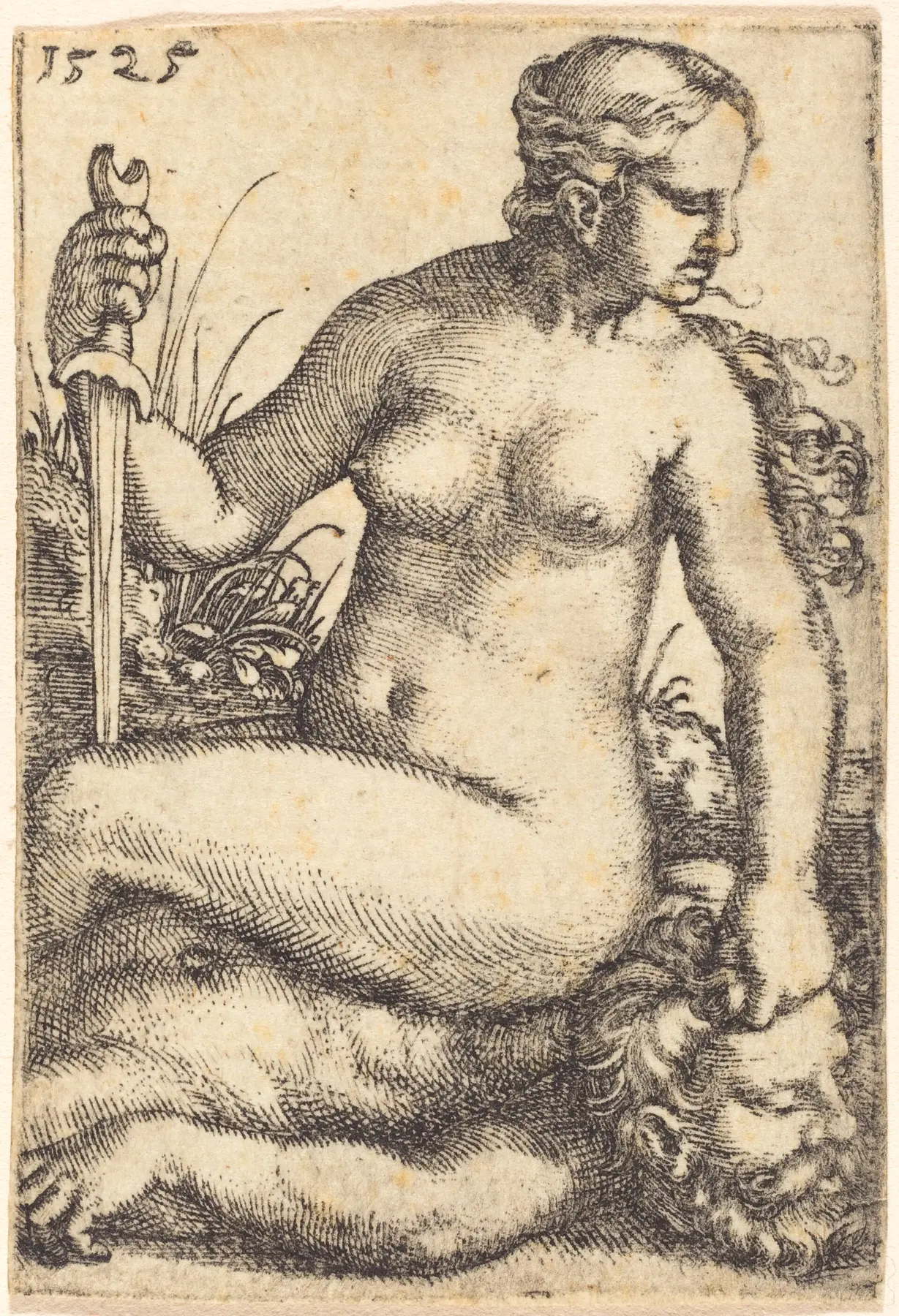
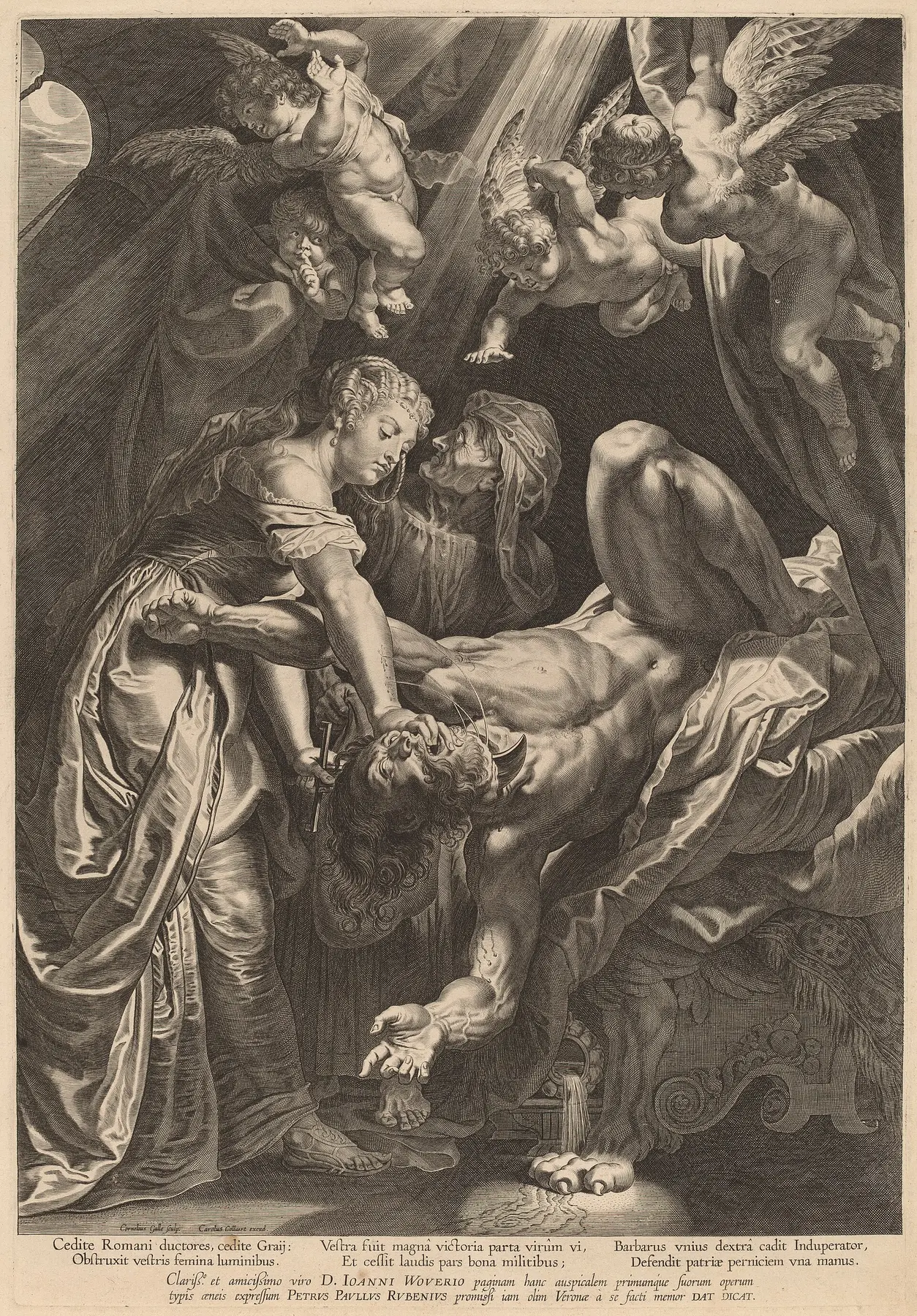
Gallery label
Allori turns the aftermath into a polished double portrait, long read through the artist's romantic life but never exhausted by that anecdote.
Look closely
The head hangs at the picture plane, gray flesh answering Judith's cold satin. Her hand converts weight into display while the maid's gaze breaks the exchange.
Why this Judith matters
The autobiographical tradition shows how readily Judith could absorb the emotional voltage of portraiture, whether or not biography governs the painting.
Sources for this record:Uffizi Galleries, Palazzo Pitti record ↗
“Allori turns the aftermath into a polished double portrait, long read through the artist's romantic life but never exhausted by that anecdote.”
Narrative index
Primary catalogue placement: display of the head, Judith 13:14–16. The index organizes comparison; it does not claim that every visual detail comes from those verses or that the work touches only one episode.