Gallery label
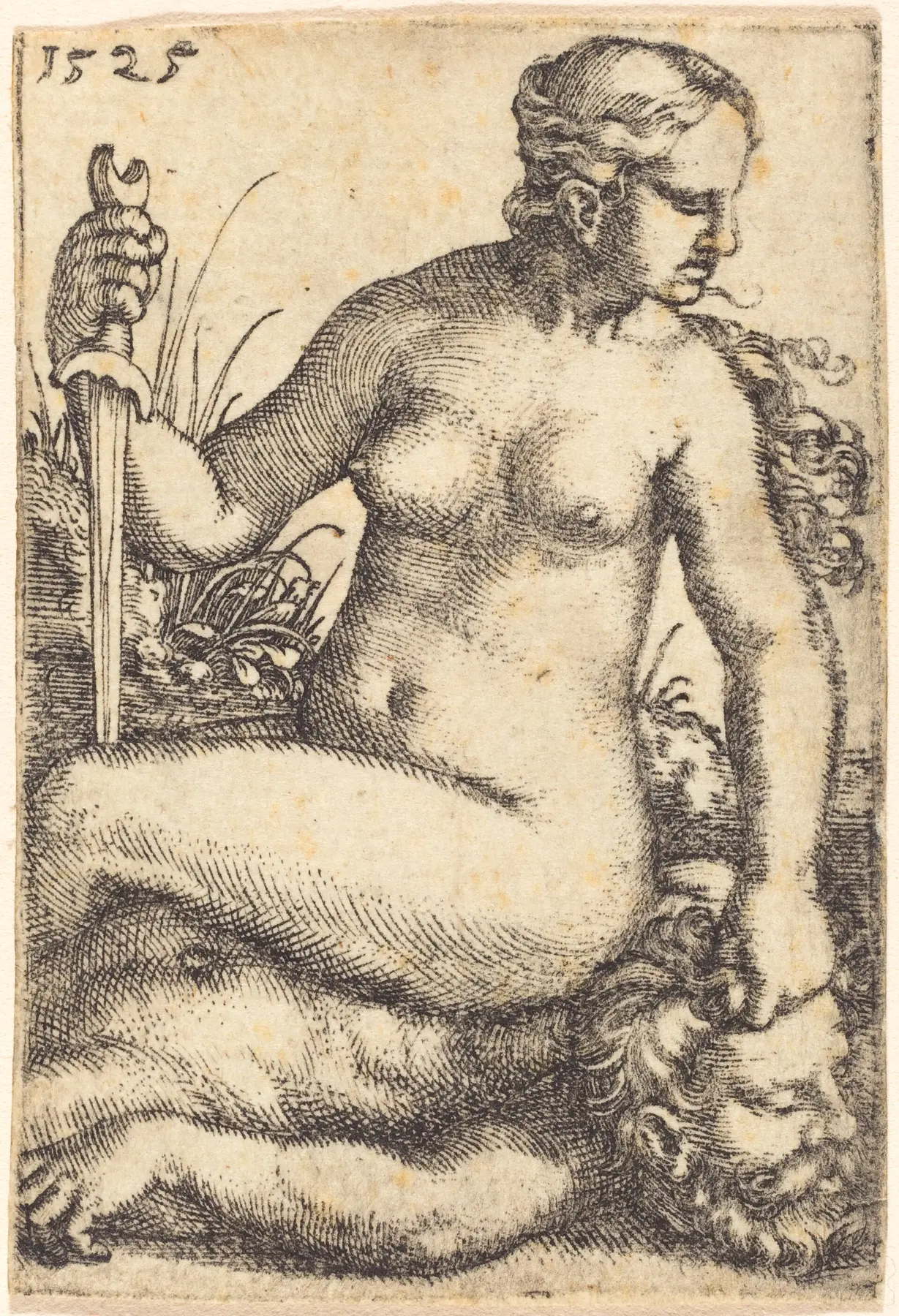
Barely five centimetres high, Beham's Judith becomes a portable, eroticized Power of Women emblem seated directly on the defeated body.
Look closely
The corpse makes a diagonal base for Judith's upright sword and compact body. Dense engraved lines turn flesh, hair, and ground into a miniature field meant for close handling.
Why this Judith matters
The small print moves Judith from narrative action into a collectible moral-erotic emblem. Its scale and reproducibility belong to the meaning, not merely to the method of manufacture.
Sources for this record:National Gallery of Art object record ↗
“Barely five centimetres high, Beham's Judith becomes a portable, eroticized Power of Women emblem seated directly on the defeated body.”
Narrative index
Primary catalogue placement: display of the head, Judith 13:14–16. The index organizes comparison; it does not claim that every visual detail comes from those verses or that the work touches only one episode.