Gallery label
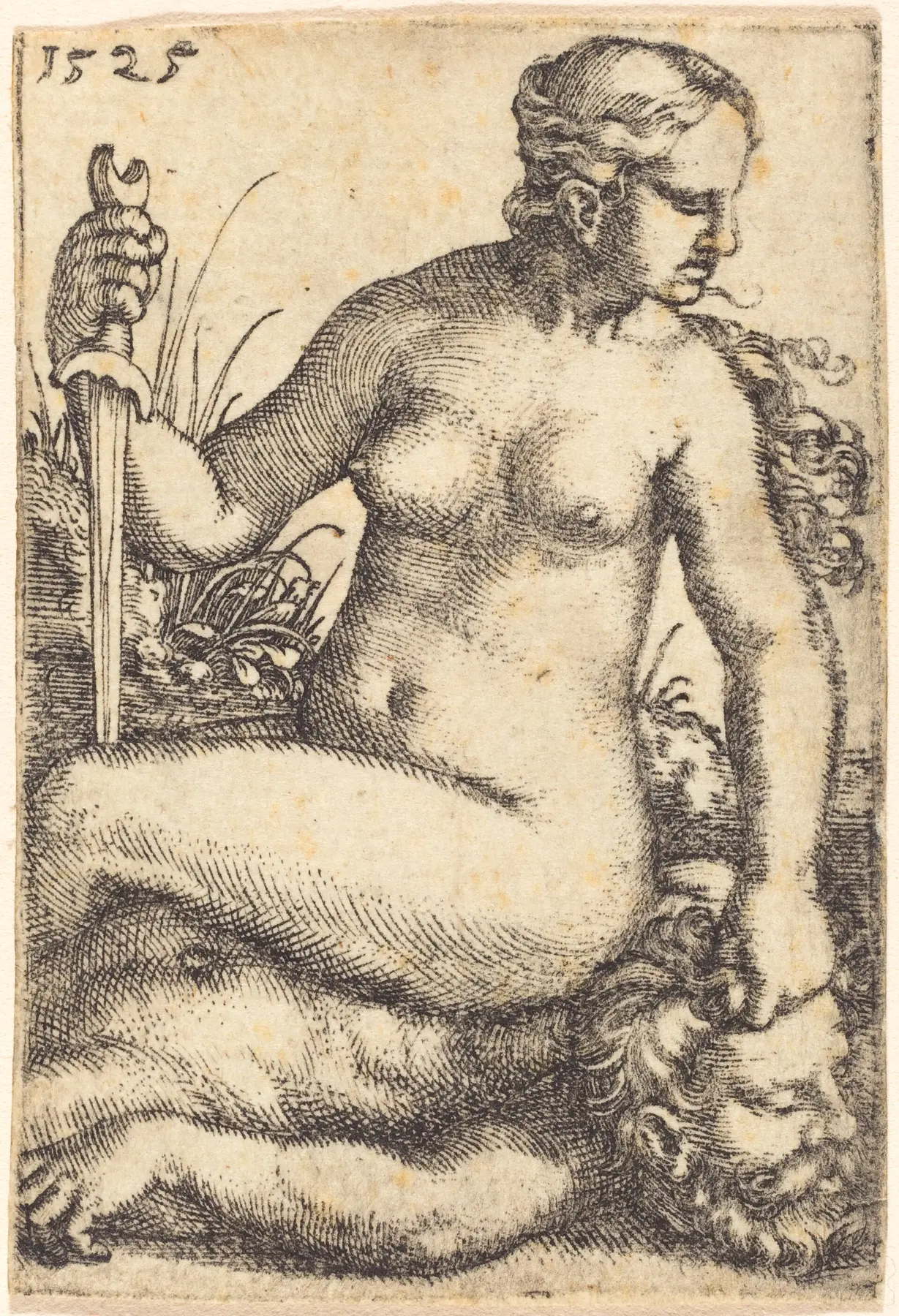
An American portraitist copied Allori's famous Judith at full scale, making transmission—not originality—a map-worthy fact.
Look closely
Peale preserves the polished confrontation between splendid dress and gray severed head. The copy makes an Italian composition legible through an American painter's training, patrons, and market.
Why this Judith matters
The work demonstrates that the Judith tradition crossed the Atlantic through copying as well as invention. Philadelphia practice belongs to that history, not merely to its reception.
Sources for this record:Princeton University Art Museum record ↗
“An American portraitist copied Allori's famous Judith at full scale, making transmission—not originality—a map-worthy fact.”
Narrative index
Primary catalogue placement: display of the head, Judith 13:14–16. The index organizes comparison; it does not claim that every visual detail comes from those verses or that the work touches only one episode.