Gallery label
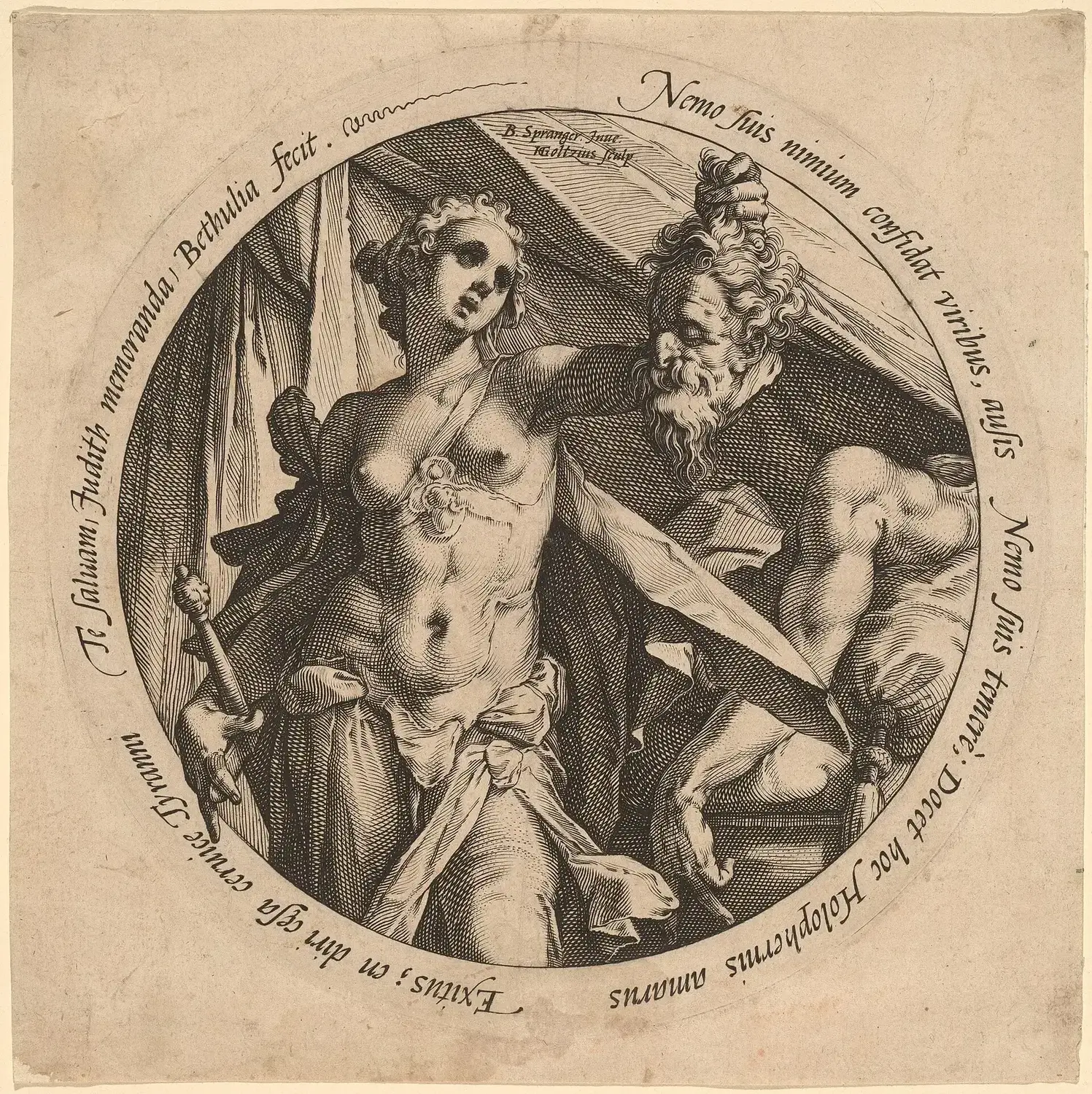
Goltzius translates Spranger's courtly Mannerism into a circular engraving whose virtuoso line could carry the design far beyond Prague or Haarlem.
Look closely
Judith, the head, and a muscular attendant fill the round field. Swelling contours and radiating hatchwork make the engraving announce both Spranger's invention and Goltzius's command of the burin.
Why this Judith matters
The sheet traces a transregional network from Spranger's imperial-court design to Goltzius's Dutch printmaking. The work is simultaneously after another artist and a bravura object in its own right.
Sources for this record:National Gallery of Art object record ↗
“Goltzius translates Spranger's courtly Mannerism into a circular engraving whose virtuoso line could carry the design far beyond Prague or Haarlem.”
Narrative index
Primary catalogue placement: display of the head, Judith 13:14–16. The index organizes comparison; it does not claim that every visual detail comes from those verses or that the work touches only one episode.