Gallery label
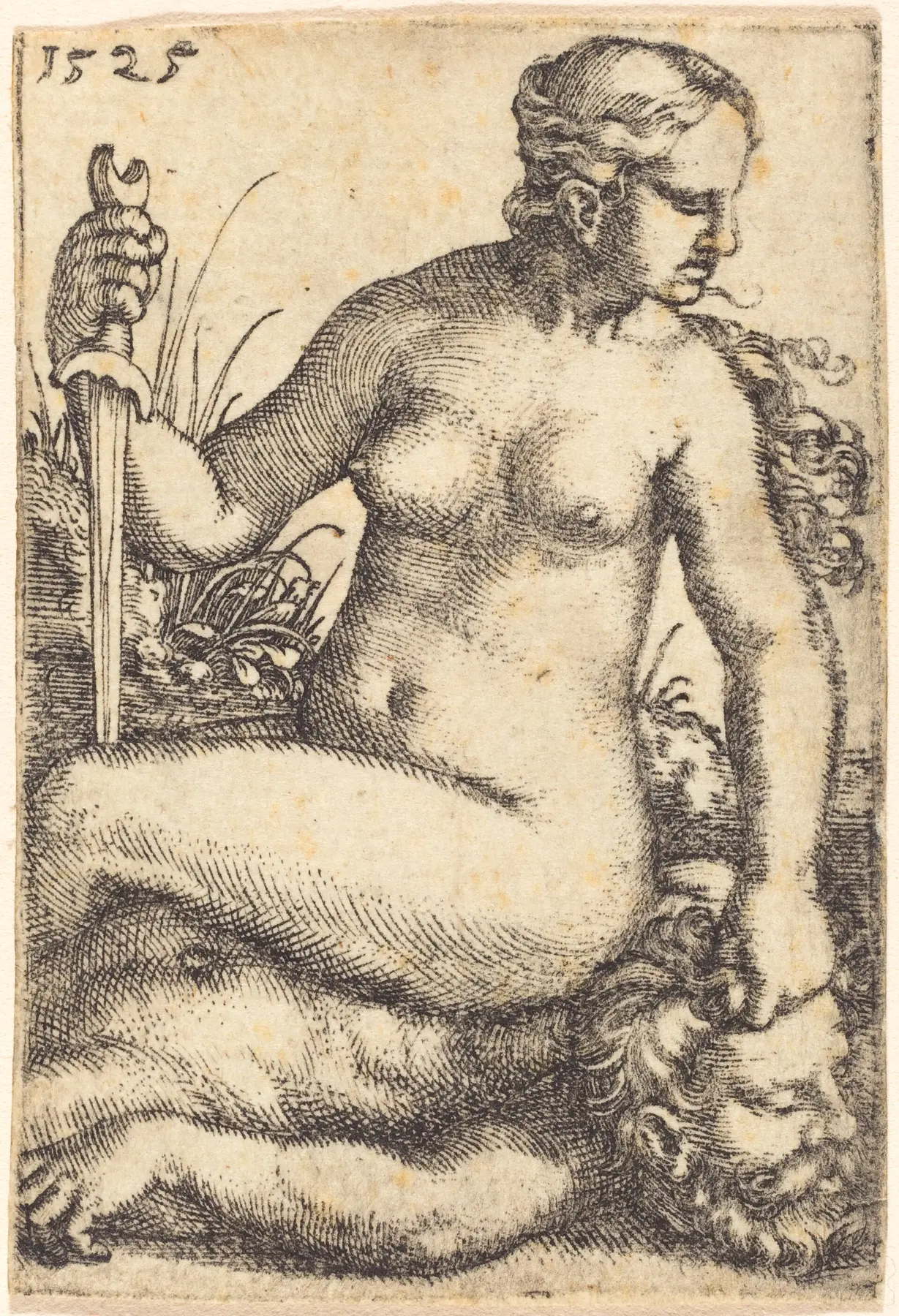
Red, gold, sword, and an absent victim turn Judith into an ‘exotic’ avenging beauty shaped by nineteenth-century Orientalist fantasy.
Look closely
The upright sword answers the long figure and narrow canvas. Metallic costume and saturated red carry the drama; Holofernes disappears, leaving Judith to perform danger alone.
Why this Judith matters
The painting makes Orientalism part of Judith’s reception history: biblical geography becomes a screen for European fantasies built from travel, props, and inherited stereotypes.
Sources for this record:The Metropolitan Museum of Art record ↗
“Red, gold, sword, and an absent victim turn Judith into an ‘exotic’ avenging beauty shaped by nineteenth-century Orientalist fantasy.”
Narrative index
Primary catalogue placement: display of the head, Judith 13:14–16. The index organizes comparison; it does not claim that every visual detail comes from those verses or that the work touches only one episode.