Gallery label
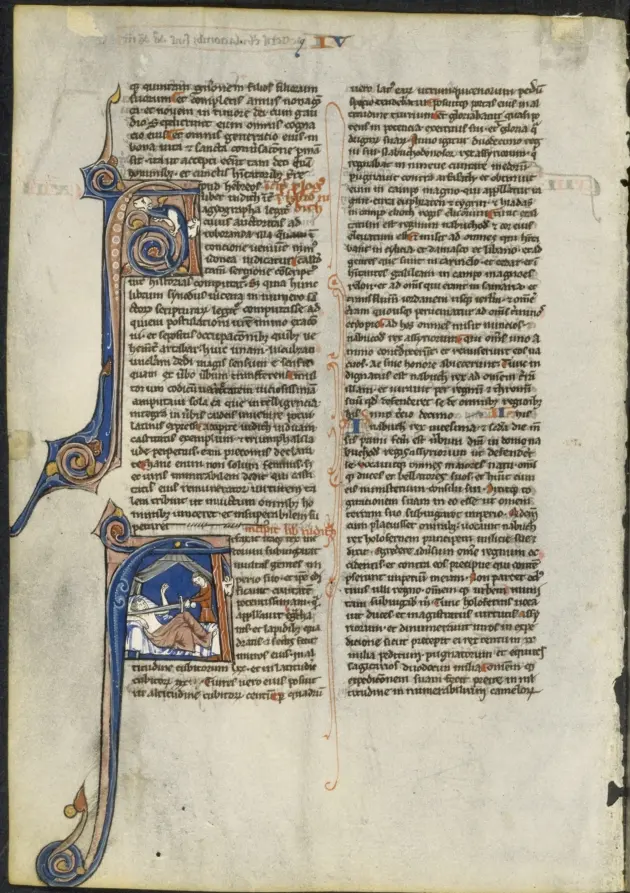
Compressed into a single letter, the killing becomes a legible sign of divinely assisted courage rather than an anatomy of violence.
Look closely
The decorated initial encloses bed, victim, heroine, and sword. Scale follows narrative importance rather than optical logic; Judith's raised weapon touches the letter itself, binding violent action to sacred text.
Why this Judith matters
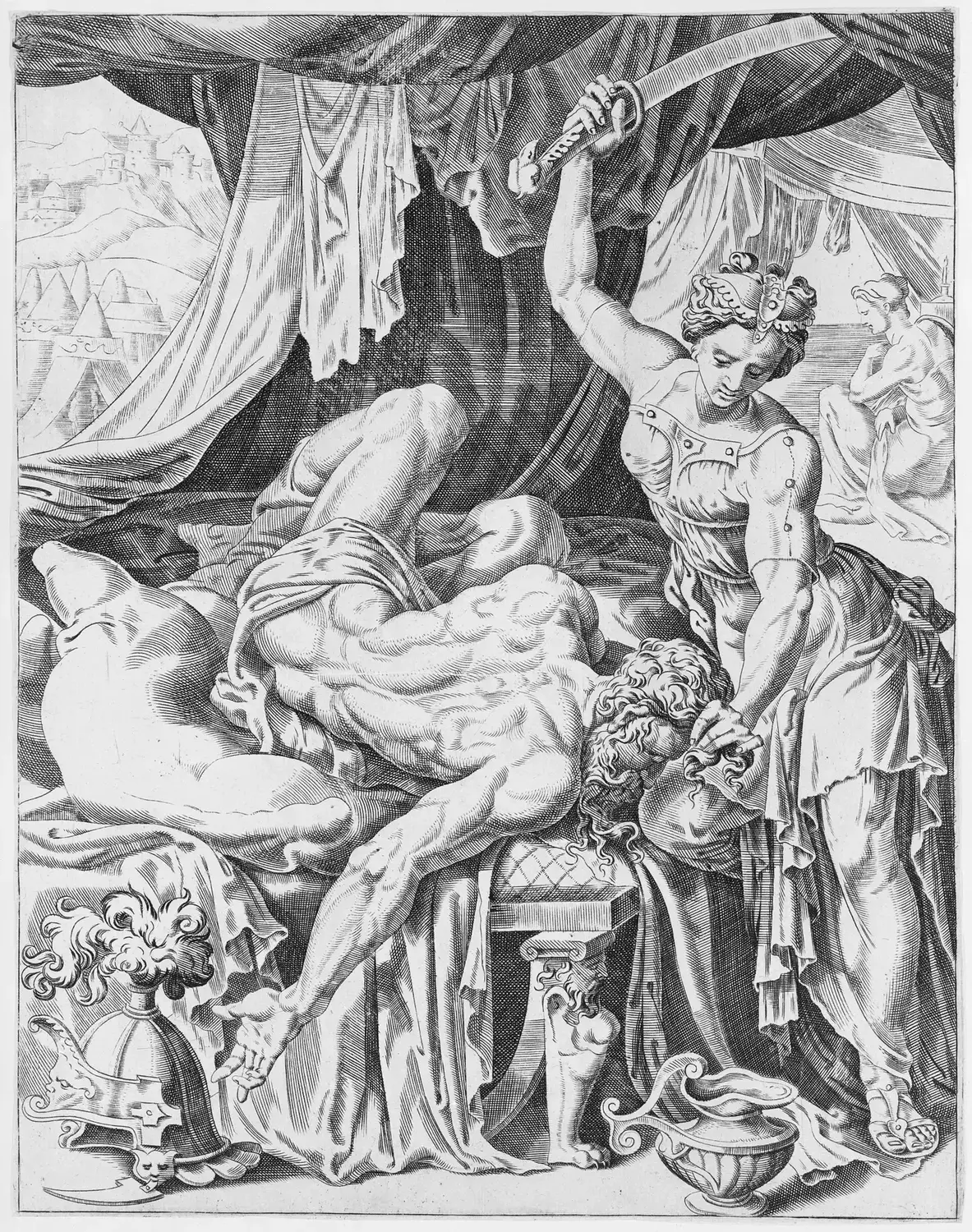
Medieval viewers already met Judith at the decisive instant, but in a visual economy that was emblematic, compressed, and devotional.
Sources for this record:Cleveland Museum of Art record ↗
“Compressed into a single letter, the killing becomes a legible sign of divinely assisted courage rather than an anatomy of violence.”
Narrative index
Primary catalogue placement: the act, Judith 13:6–8. The index organizes comparison; it does not claim that every visual detail comes from those verses or that the work touches only one episode.