Gallery label
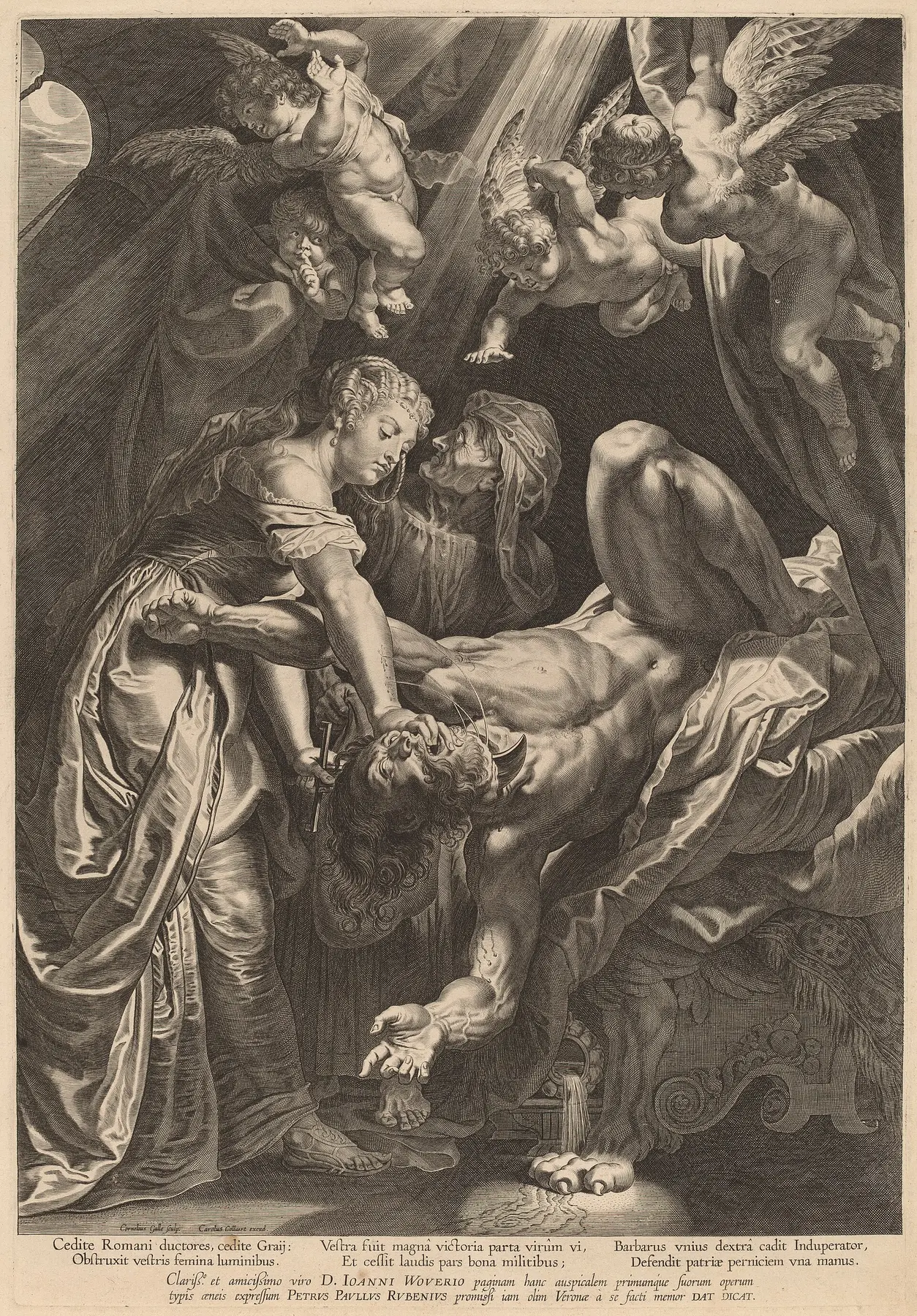
A monumental engraving after Rubens translates Baroque invention into a reproducible sheet almost sixty centimetres high.
Look closely
The body thrusts toward the viewer while Judith and her maid lean into the work of the blade; airborne figures amplify the crowded tent. Layered hatchwork carries flesh, fabric, shadow, and movement at a scale that rivals painting.
Why this Judith matters
Reproductive printmaking could spread a composition beyond an immobile painting without becoming visually minor. Galle's sheet shows how Rubens's invention entered a network of publishers, collectors, and later artists.
Sources for this record:National Gallery of Art object record ↗
“A monumental engraving after Rubens translates Baroque invention into a reproducible sheet almost sixty centimetres high.”
Narrative index
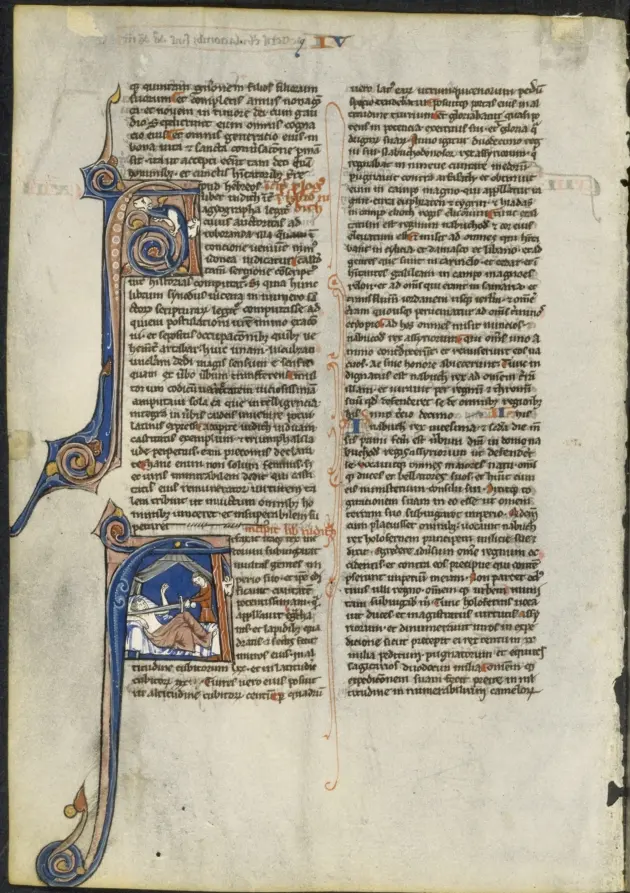
Primary catalogue placement: the act, Judith 13:6–8. The index organizes comparison; it does not claim that every visual detail comes from those verses or that the work touches only one episode.