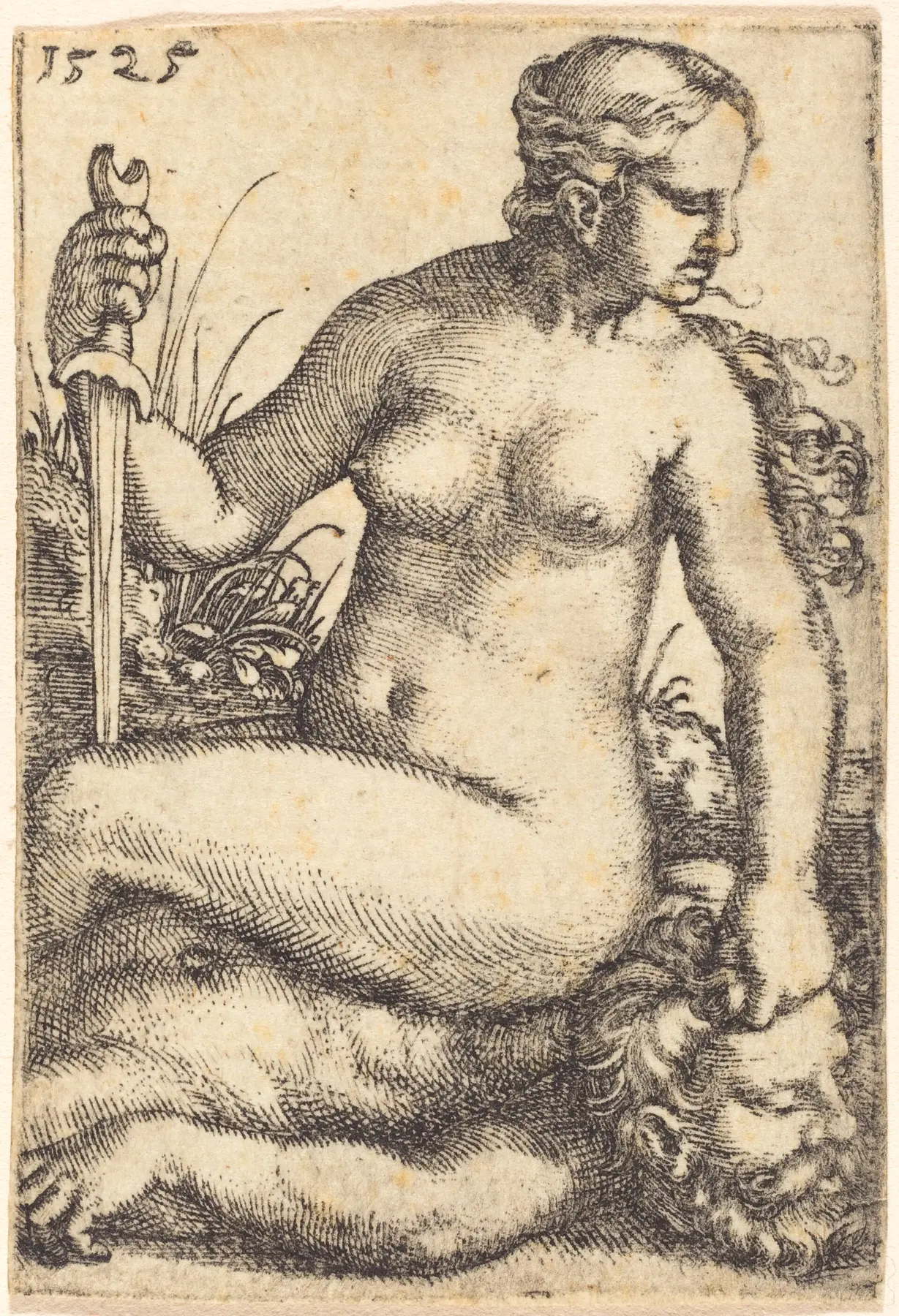
Gallery label
A Brazilian history painter working in Florence turns Judith into monumental academic theatre, then sends the canvas into a Rio de Janeiro collection.
Look closely
The vertical canvas builds from trophy and drapery to the raised arm. Polished anatomy, archaeological costume, and controlled spotlight convert the biblical episode into Salon-scale public rhetoric.
Why this Judith matters
The painting widens the geography of academic art. Judith’s nineteenth-century life was transatlantic, shaped by artists and institutions that popular surveys centered on Europe routinely omit.
Sources for this record:Museu Nacional de Belas Artes record ↗
“A Brazilian history painter working in Florence turns Judith into monumental academic theatre, then sends the canvas into a Rio de Janeiro collection.”
Narrative index
Primary catalogue placement: display of the head, Judith 13:14–16. The index organizes comparison; it does not claim that every visual detail comes from those verses or that the work touches only one episode.