Gallery label
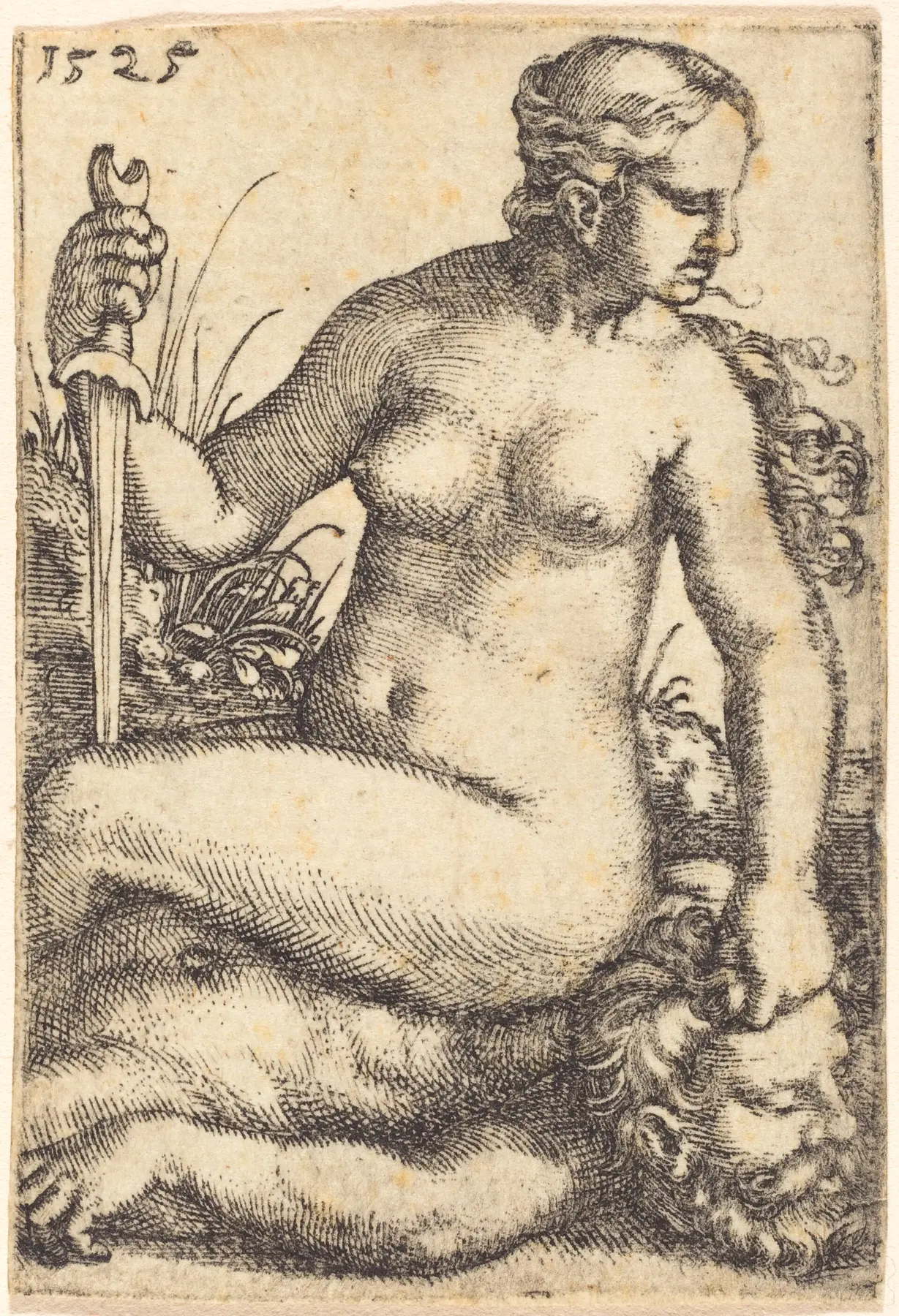
At only nine centimetres high, wash and flickering pen strokes reduce Judith to an experiment in pose, weight, and silhouette.
Look closely
The drawing thinks in motion. A few dark accents establish the head and sword while diluted wash searches for volume without fixing every contour.
Why this Judith matters
A study sheet restores process to an exhibition dominated by finished objects: Judith was rehearsed, revised, and transmitted through working drawings.
Sources for this record:The Metropolitan Museum of Art record ↗
“At only nine centimetres high, wash and flickering pen strokes reduce Judith to an experiment in pose, weight, and silhouette.”
Narrative index
Primary catalogue placement: display of the head, Judith 13:14–16. The index organizes comparison; it does not claim that every visual detail comes from those verses or that the work touches only one episode.