Gallery label
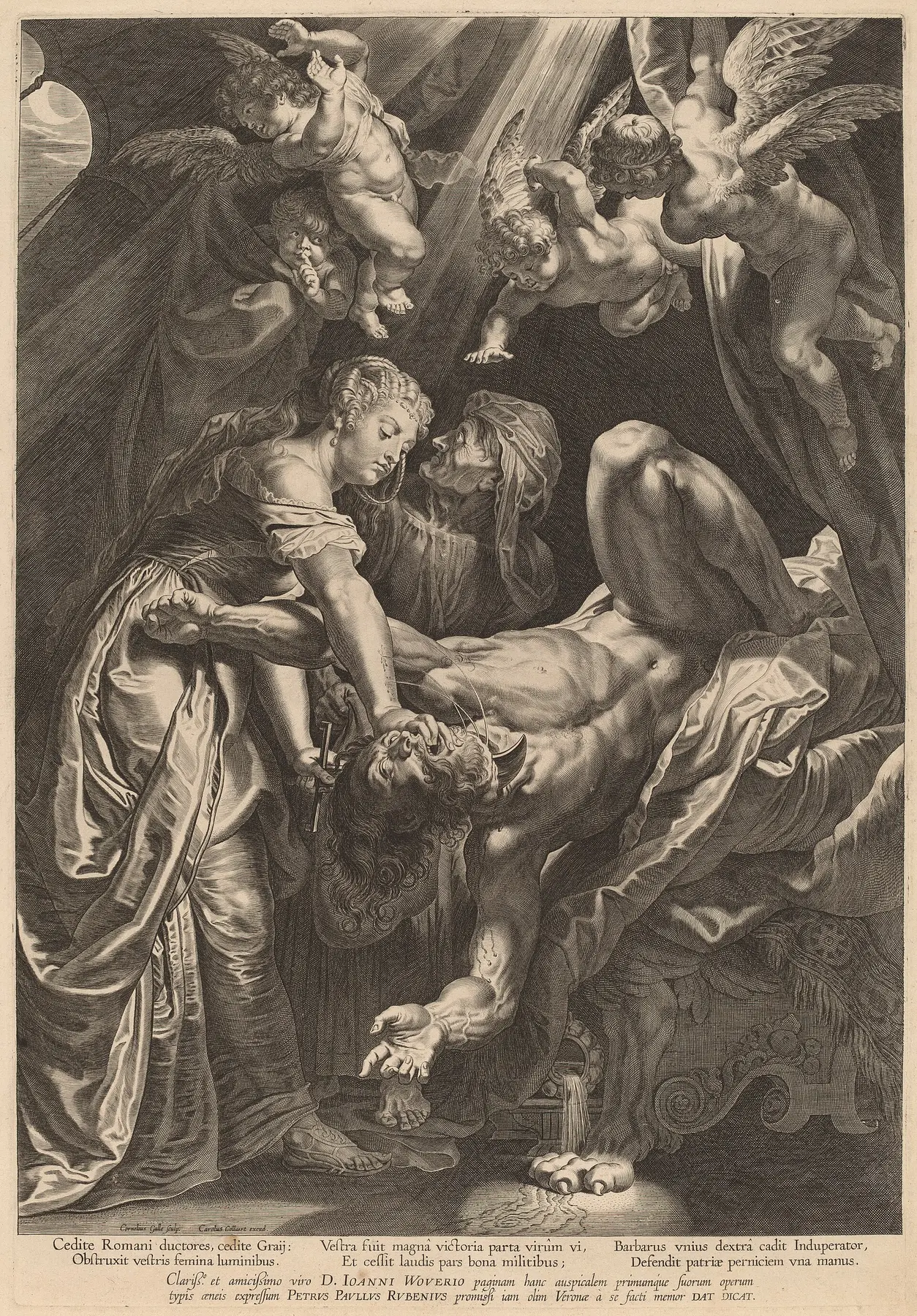
An unsettled attribution becomes evidence: father, daughter, workshop, and possible collaboration complicate the desire for a single authorial voice.
Look closely
The women form a tight horizontal block against the tent. Their heads turn in opposite degrees of alarm while the wrapped trophy anchors the foreground between them.
Why this Judith matters
The painting makes attribution intellectually productive. It asks how gendered expectations shape what viewers assign to Orazio, Artemisia, or shared studio practice.
Sources for this record:National Museum of Art, Architecture and Design record ↗
“An unsettled attribution becomes evidence: father, daughter, workshop, and possible collaboration complicate the desire for a single authorial voice.”
Narrative index
Primary catalogue placement: escape from the camp, Judith 13:9–12. The index organizes comparison; it does not claim that every visual detail comes from those verses or that the work touches only one episode.