Gallery label
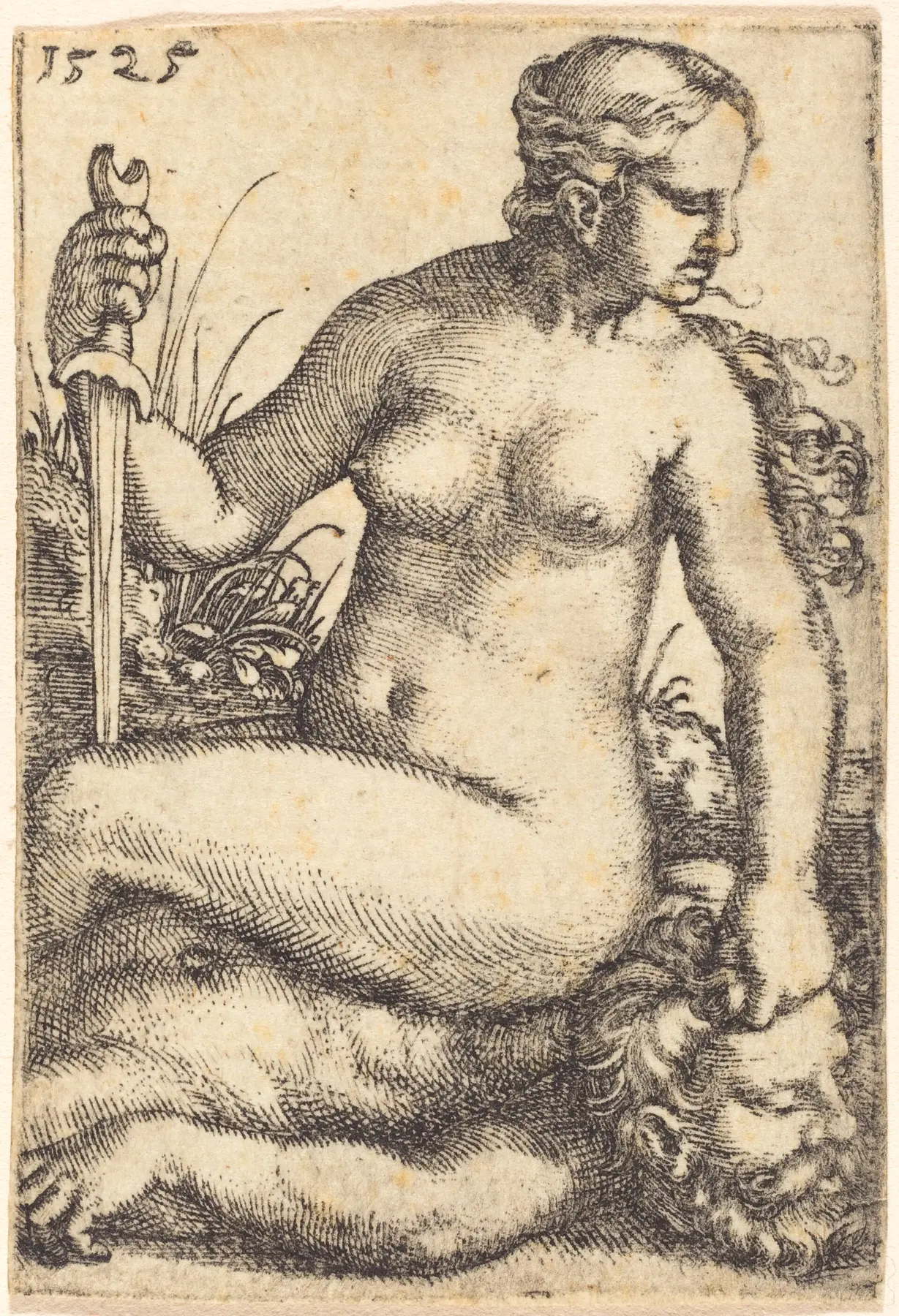
Four years after Pedro Américo painted Judith in Florence, Agostini pulled her into Rio's satirical press and made the academic heroine answer to public life.
Look closely
The compact published image exaggerates pose and rhetoric rather than imitating Salon finish. Reproduction changes scale, audience, speed, and the social work the heroine can perform.
Why this Judith matters
A Brazilian caricature is not a footnote to a Brazilian academic painting. It shows the subject becoming vernacular, reproducible, and argumentative in Rio de Janeiro.
Sources for this record:Publication image / Wikimedia Commons file record ↗
“Four years after Pedro Américo painted Judith in Florence, Agostini pulled her into Rio's satirical press and made the academic heroine answer to public life.”
Narrative index
Primary catalogue placement: display of the head, Judith 13:14–16. The index organizes comparison; it does not claim that every visual detail comes from those verses or that the work touches only one episode.