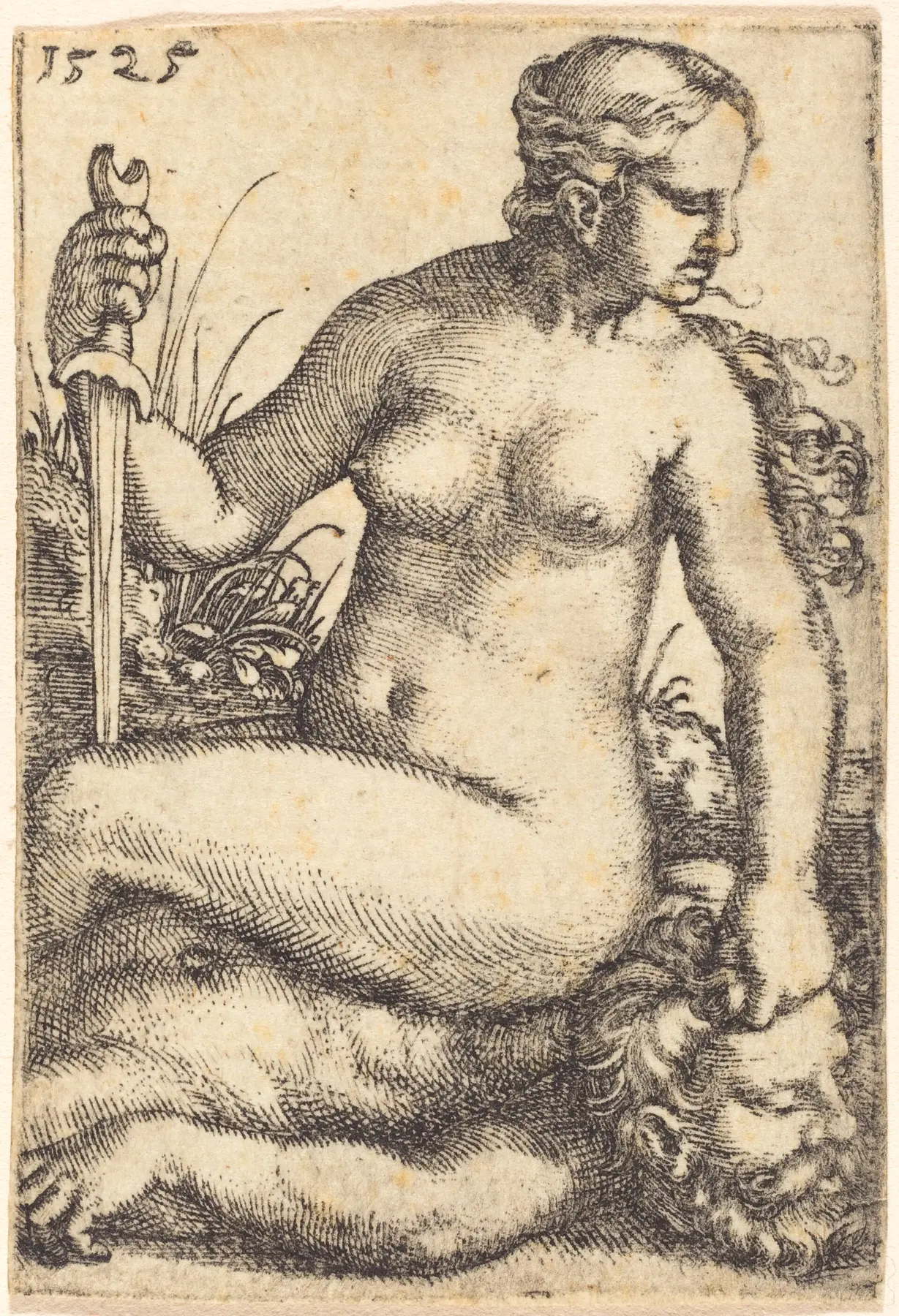
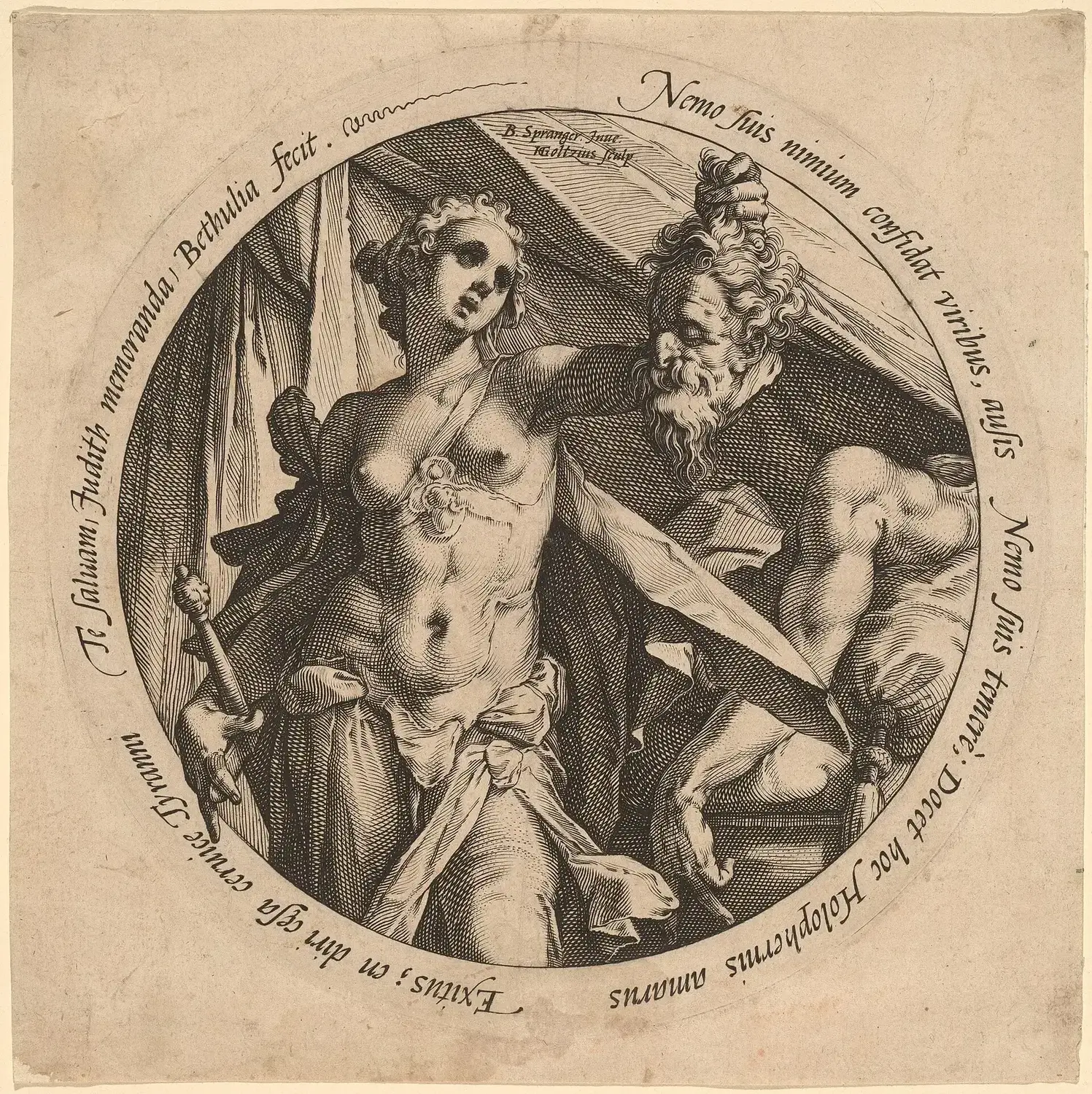
Gallery label
Silk, pearls, and turning bodies convert aftermath into aristocratic theater. The painting hovers near portraiture without surrendering its biblical identity.
Look closely
Judith's luminous sleeve is the hinge. Her face turns away while her hand remains implicated below; the attendant and head complete a descending arc from display to concealment.
Why this Judith matters
Judith enters the visual language of elite female portraiture, becoming socially immediate and sharpening later confusion with Salome.
Sources for this record:Kunsthistorisches Museum record ↗
“Silk, pearls, and turning bodies convert aftermath into aristocratic theater. The painting hovers near portraiture without surrendering its biblical identity.”
Narrative index
Primary catalogue placement: display of the head, Judith 13:14–16. The index organizes comparison; it does not claim that every visual detail comes from those verses or that the work touches only one episode.