Gallery label
Attribution remains open, but the painting makes clear how readily Judith could operate as a vehicle for female presence, dress, and professional authorship.
Look closely
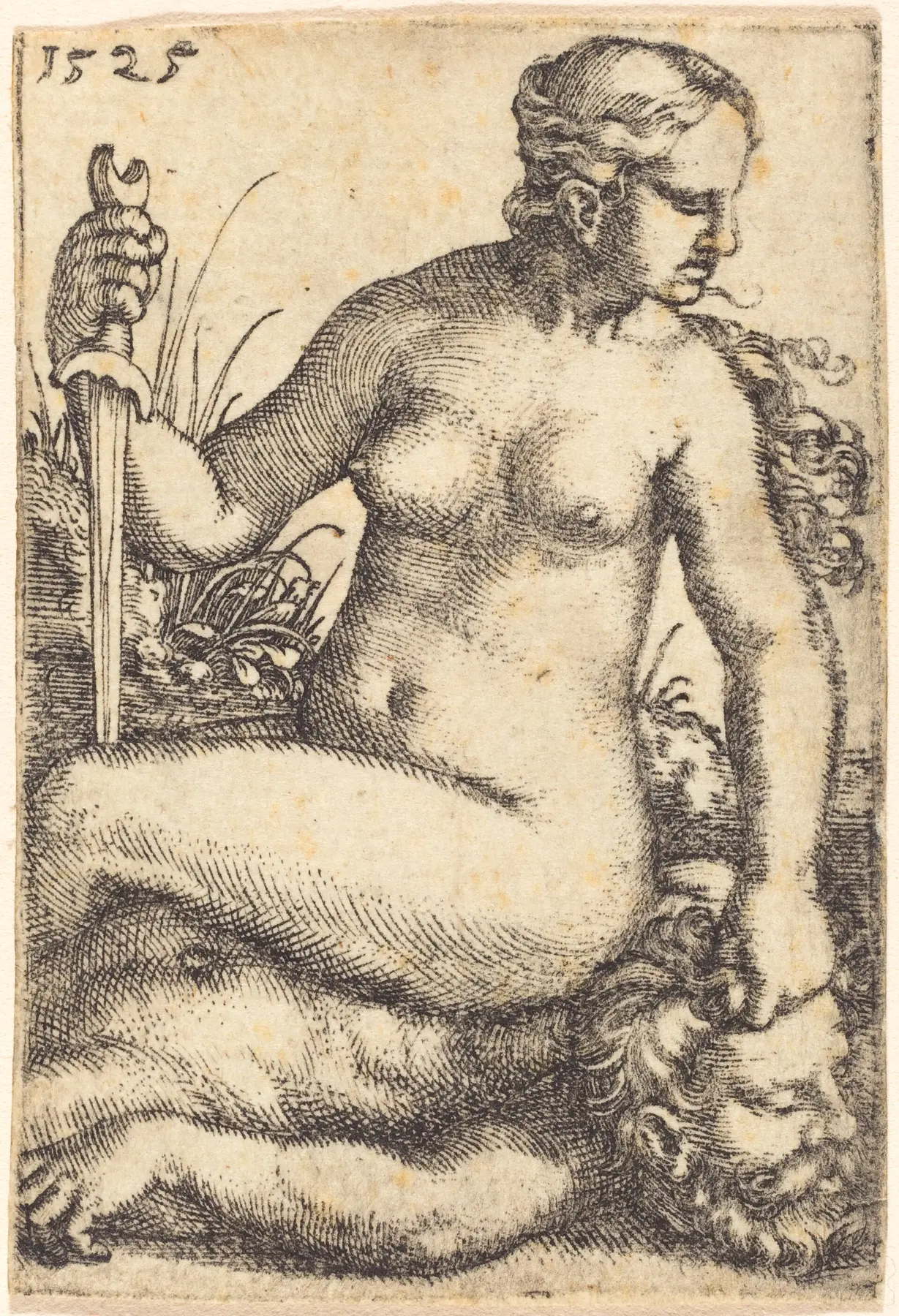
The compact bust-length format presses satin, jewels, flesh, sword, and head into a portrait field. Judith’s direct gaze is more commanding than the trophy below it.
Why this Judith matters
Placing a cautiously attributed Fontana beside Galizia and Gentileschi complicates any story in which women artists arrive suddenly or speak with one voice.
Sources for this record:National Museum in Kraków record ↗
“Attribution remains open, but the painting makes clear how readily Judith could operate as a vehicle for female presence, dress, and professional authorship.”
Narrative index
Primary catalogue placement: display of the head, Judith 13:14–16. The index organizes comparison; it does not claim that every visual detail comes from those verses or that the work touches only one episode.