Gallery label
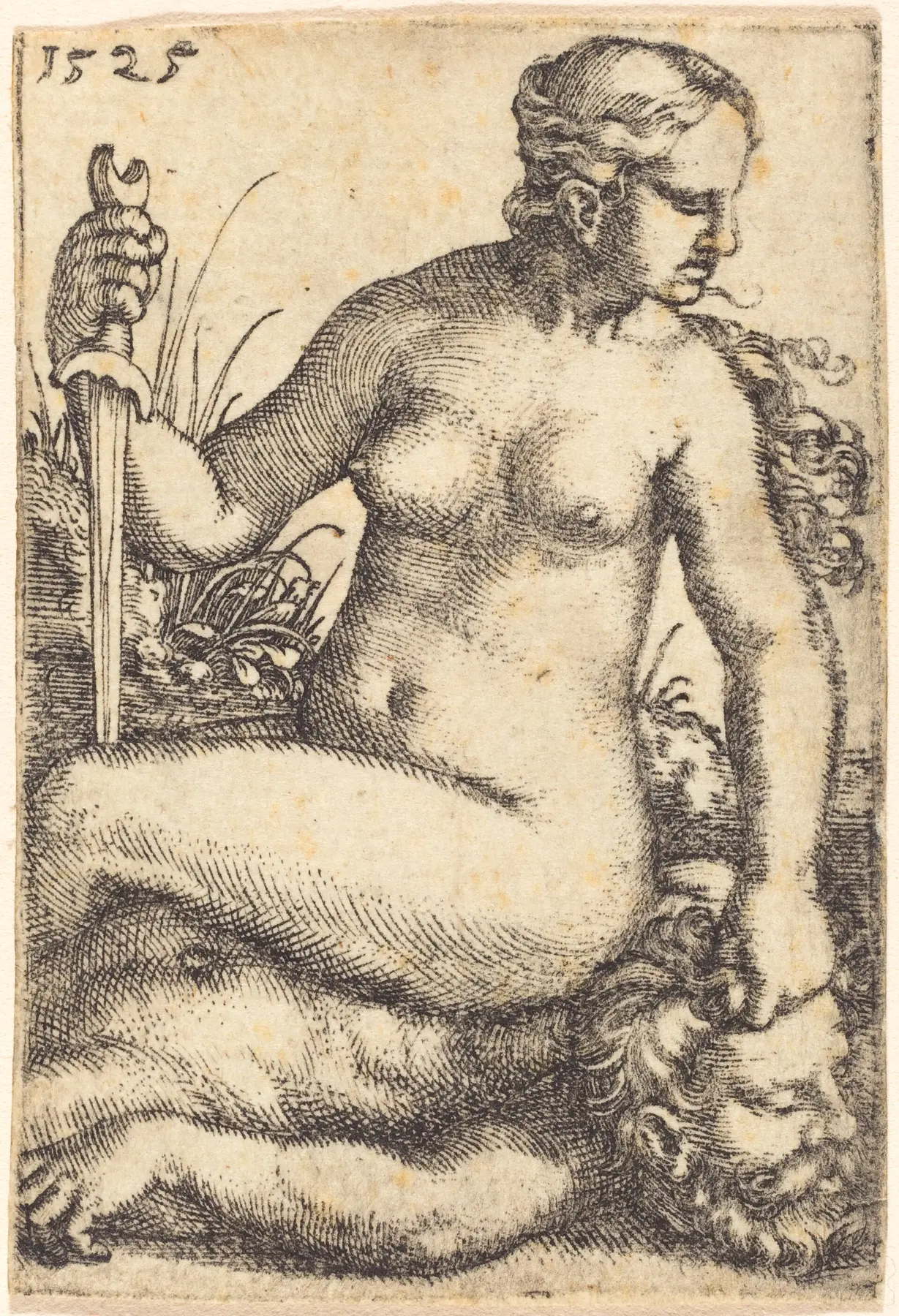
A biblical conqueror decorates a container made to charge firearms: Judith becomes a talisman of force held in the hand.
Look closely
The antler’s natural fork determines the compact silhouette. Within an architectural niche, the sword and dangling head make the heroine instantly legible at only a few centimetres high.
Why this Judith matters
Judith did not live only on gallery walls. A weapon accessory makes iconography portable, tactile, and entangled with the daily material culture of violence.
Sources for this record:Cleveland Museum of Art record ↗
“A biblical conqueror decorates a container made to charge firearms: Judith becomes a talisman of force held in the hand.”
Narrative index
Primary catalogue placement: display of the head, Judith 13:14–16. The index organizes comparison; it does not claim that every visual detail comes from those verses or that the work touches only one episode.