Gallery label
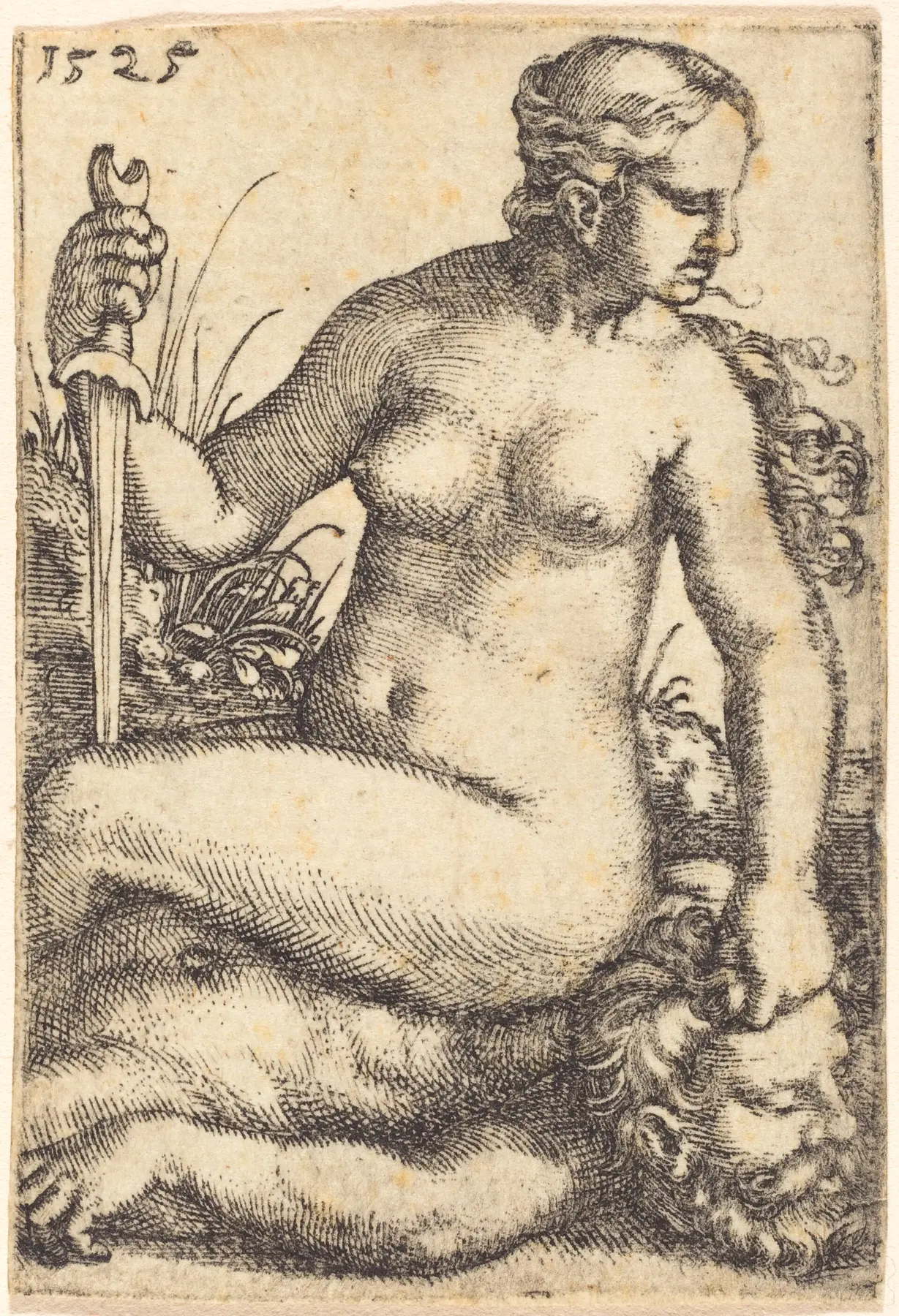
Judith reaches Isfahan through circulating European images, then returns transformed within a Safavid album tradition.
Look closely
Modelled bodies, receding landscape, drapery, and architecture adapt European pictorial devices, while gold, paper, border, and album scale place the scene in a different ecology of looking.
Why this Judith matters
This work breaks a falsely self-contained European canon. Judith’s image moved through diplomatic, mercantile, and artistic exchange, acquiring new material and cultural lives.
Sources for this record:Khalili Collection of Islamic Art record ↗
“Judith reaches Isfahan through circulating European images, then returns transformed within a Safavid album tradition.”
Narrative index
Primary catalogue placement: display of the head, Judith 13:14–16. The index organizes comparison; it does not claim that every visual detail comes from those verses or that the work touches only one episode.