Gallery label
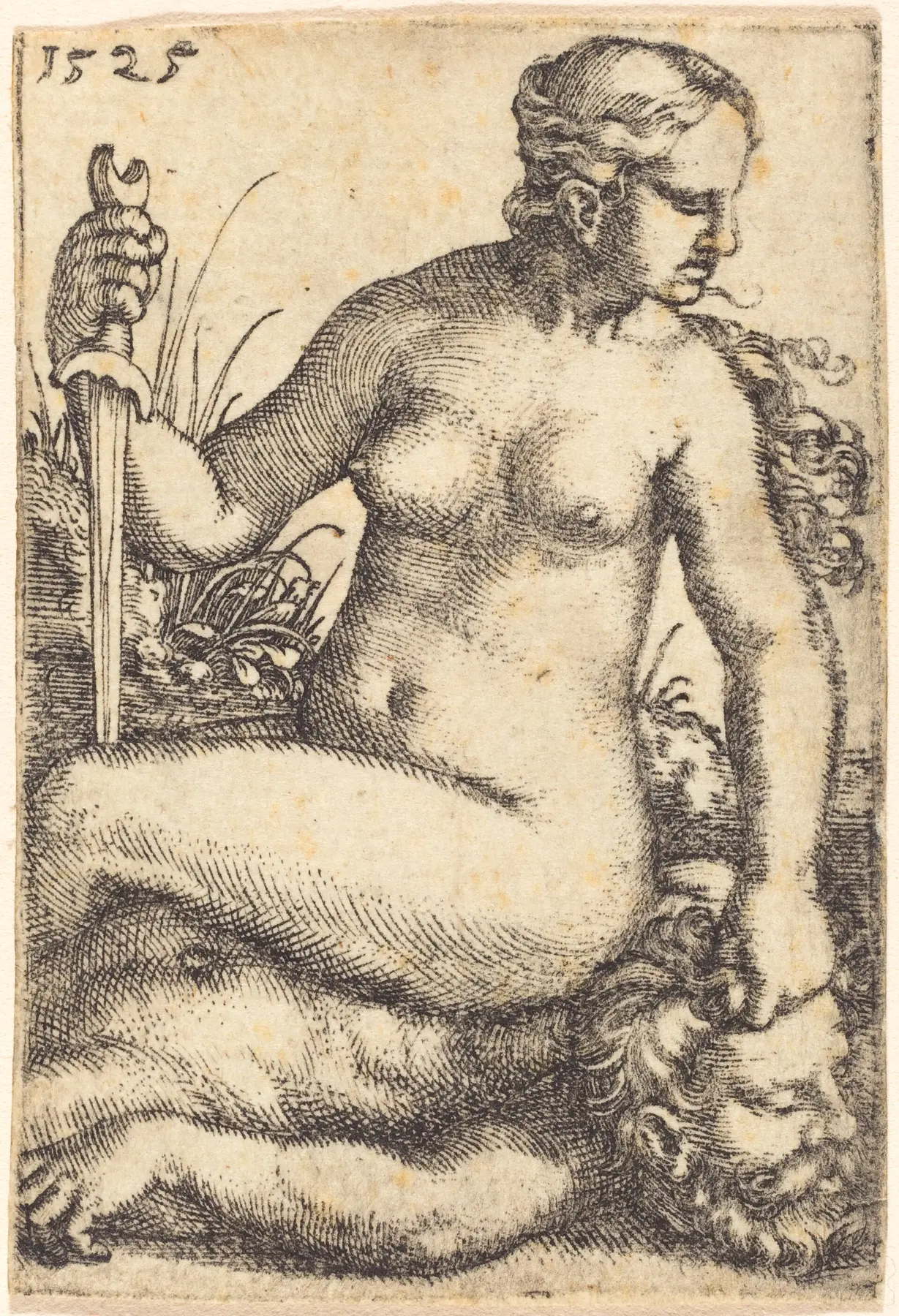
A bare foot rests on the head with almost no visible effort, making pastoral calm carry the entire moral and erotic contradiction.
Look closely
The narrow figure rises like a tree between dark foliage and distant blue landscape. Sword and exposed leg descend toward the compressed head, joining elegance to unmistakable domination.
Why this Judith matters
The painting now assigned to Giorgione helped establish the beautiful, contemplative aftermath that later artists would intensify, moralize, eroticize, or violently reject.
Sources for this record:State Hermitage Museum record ↗NGA catalogue note connecting the Raphael Judith with the Hermitage Giorgione ↗
“A bare foot rests on the head with almost no visible effort, making pastoral calm carry the entire moral and erotic contradiction.”
Narrative index
Primary catalogue placement: display of the head, Judith 13:14–16. The index organizes comparison; it does not claim that every visual detail comes from those verses or that the work touches only one episode.