Gallery label
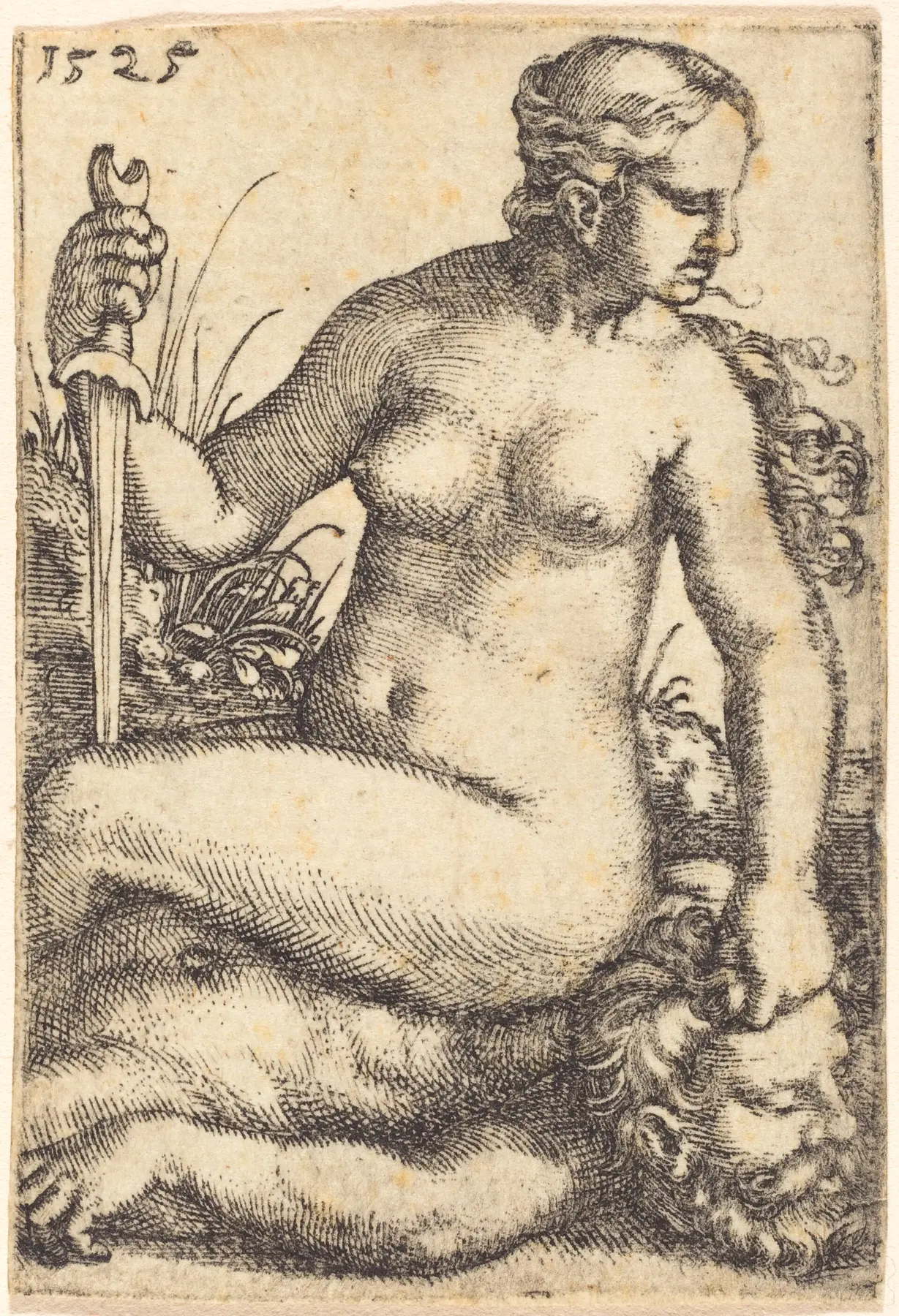
Rough clay and deep folds make victory tactile. The severed head is not painted illusion but a small volume that shares Judith’s space.
Look closely
Tool marks remain visible across dress, hair, and base. Judith’s reaching arm closes the composition around the head, whose physical weight is registered in the downward gesture.
Why this Judith matters
Sculpture changes the encounter: viewers can imagine circling the action, and light continually redraws the same folds and suspended trophy.
Sources for this record:Cleveland Museum of Art record ↗
“Rough clay and deep folds make victory tactile. The severed head is not painted illusion but a small volume that shares Judith’s space.”
Narrative index
Primary catalogue placement: display of the head, Judith 13:14–16. The index organizes comparison; it does not claim that every visual detail comes from those verses or that the work touches only one episode.